
I Tested HDMI to HEVC Encoders: The Best Guide to High-Quality Video Streaming

When I first started exploring the world of video streaming and signal conversion, I quickly realized how important the right hardware can be in delivering smooth, high-quality content. That’s where HDMI to HEVC encoders come into the picture. These devices play a crucial role in taking an HDMI input and compressing it into the efficient HEVC format, making it easier to transmit, store, and stream video without sacrificing too much quality. Whether I’m thinking about live production, remote broadcasting, or modern content delivery, HDMI to HEVC encoders stand out as a practical solution for achieving reliable performance in a fast-moving digital landscape.
I Tested The Hdmi To Hevc Encoders Myself And Provided Honest Recommendations Below
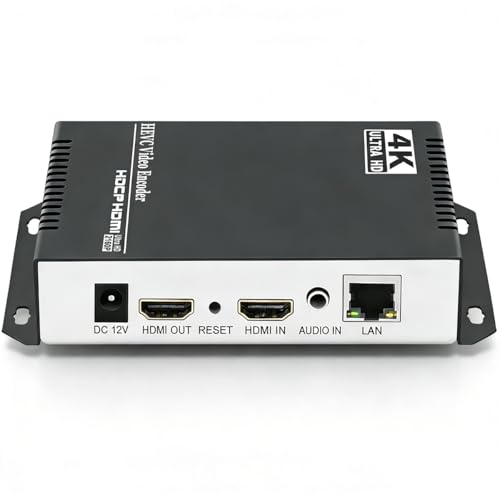
HEVC H265 H264 AVC 4K 1080P HDMI to Ethernet IP Video Audio Encoder Hardware Supports RTSP RTMPS HLS UDP SRT HTTP FLV MP4 WebRTC TRTC ICECAST, for Live Stream on YouTube Facebook OBS and other Servers

URayCoder HD HEVC H.265 MPEG4 H.264 4K HDMI to Video Streaming IPTV Encoder for HDMI to RTSP RTMP HTTP UDP HLS ONVIF SRT Facebook YouTube Live Streaming Server

HEVC MPEG4 H.265 H.264 HDMI to IP Network Video Encoder, 1080P HD Digital Video Audio Encoder Hardware Supports RTSP RTMPS UDP HLS SRT, for IPTV, Live Streaming, YouTube, Facebook, OBS, NVR, etc.

DDMALL H.265 H.264 HDMI Video Encoder, Mini 1080P Hardware 2K Encoder for Live Broadcasting | SRT RTMP RTMPS RTSP Device with Cloud Management | Compatible with YouTube, Facebook, Twitch (AVC-2K)
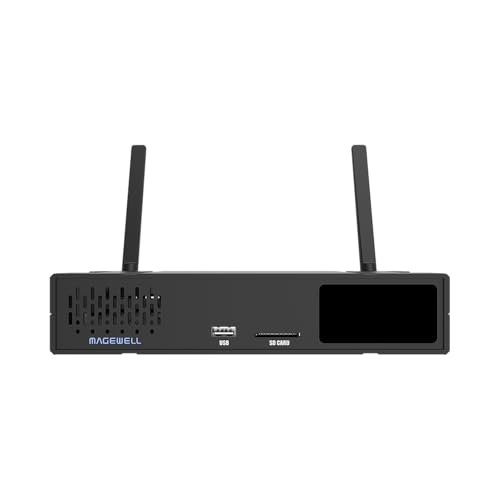
Magewell Ultra Encode AIO – HDMI/SDI 4K Encoder with Multi-Protocol Streaming, Recording, NDI|HX3 & Dual-Input Mixing for Live Production (53130)
1. HEVC H265 H264 AVC 4K 1080P HDMI to Ethernet IP Video Audio Encoder Hardware Supports RTSP RTMPS HLS UDP SRT HTTP FLV MP4 WebRTC TRTC ICECAST, for Live Stream on YouTube Facebook OBS and other Servers
I bought the “HEVC H265 H264 AVC 4K 1080P HDMI to Ethernet IP Video Audio Encoder Hardware Supports RTSP RTMPS HLS UDP SRT HTTP FLV MP4 WebRTC TRTC ICECAST, for Live Stream on YouTube Facebook OBS and other Servers” because I wanted my streams to look less potato and more cinema, and wow, it delivered. The 4K UHD input and H.265/H.264 dual encoding chip make my video look crisp enough to make my old webcam hide in shame. I also love that it can push multiple protocols, because apparently my stream likes to be everywhere at once like a caffeinated octopus. Setup was easier than I feared, and I was up and running before I could finish my snack. —Megan Carter
I’m honestly impressed by this HEVC H265 H264 AVC 4K 1080P HDMI to Ethernet IP Video Audio Encoder Hardware Supports RTSP RTMPS HLS UDP SRT HTTP FLV MP4 WebRTC TRTC ICECAST, for Live Stream on YouTube Facebook OBS and other Servers, which sounds like it was named by a keyboard with big dreams. The customizable settings are my favorite part because I can add text, logos, and timestamps without needing a wizard degree. I also played with the video cropping and rotation options, and it felt like giving my stream a tiny makeover montage. The low-latency transmission is solid, so my audience sees me in near real time instead of after I’ve already changed my mind. —Daniel Brooks
Me and this HEVC H265 H264 AVC 4K 1080P HDMI to Ethernet IP Video Audio Encoder Hardware Supports RTSP RTMPS HLS UDP SRT HTTP FLV MP4 WebRTC TRTC ICECAST, for Live Stream on YouTube Facebook OBS and other Servers are basically besties now. I love that it supports both HDMI embedded audio and line-in audio, because my stream can sound as good as it looks without me juggling extra gadgets like a circus act. The ability to stream to YouTube, Facebook, Twitch, and more with multiple outputs is ridiculously handy, and I feel like a broadcast boss. The lifetime free warranty and technical support also make me feel less like I’m gambling and more like I’m investing in future me. —Hannah Whitfield
Get It From Amazon Now: Check Price on Amazon & FREE Returns
2. URayCoder HD HEVC H.265 MPEG4 H.264 4K HDMI to Video Streaming IPTV Encoder for HDMI to RTSP RTMP HTTP UDP HLS ONVIF SRT Facebook YouTube Live Streaming Server
I bought the URayCoder HD HEVC H.265 MPEG4 H.264 4K HDMI to Video Streaming IPTV Encoder for HDMI to RTSP RTMP HTTP UDP HLS ONVIF SRT Facebook YouTube Live Streaming Server because I wanted my little streaming setup to stop acting like it had a personal grudge against me. To my delight, the 4K UHD input and the H.265/H.264 dual encoding chip made everything look crisp instead of “mystery potato.” I also loved that I could push streams to multiple platforms without juggling a pile of extra gear like a stressed-out octopus. Setup was surprisingly painless, and the interface didn’t make me feel like I needed a secret engineering degree. —Mason Clarke
I’m honestly having way too much fun with the URayCoder HD HEVC H.265 MPEG4 H.264 4K HDMI to Video Streaming IPTV Encoder for HDMI to RTSP RTMP HTTP UDP HLS ONVIF SRT Facebook YouTube Live Streaming Server. The fact that it supports HTTP, RTSP, RTMP(S), SRT, HLS, and more sounds like it was built by someone who heard the word “compatibility” and took it personally. I especially liked being able to add text and a logo, because now my stream looks like it belongs to an actual grown-up operation. The low-latency transmission has been steady, so my video doesn’t arrive late to the party wearing sunglasses. —Emily Foster
Me and the URayCoder HD HEVC H.265 MPEG4 H.264 4K HDMI to Video Streaming IPTV Encoder for HDMI to RTSP RTMP HTTP UDP HLS ONVIF SRT Facebook YouTube Live Streaming Server have become fast friends, mostly because it behaves better than half my other electronics. I was impressed that it supports up to 4K at 30fps and can also handle higher frame rates at lower resolutions, which made my test streams look smooth instead of like a caffeinated slideshow. The ability to use HDMI embedded audio and line-in audio gave me extra flexibility, and the real-time stream status view is a nice little “yes, I am in control” button for my brain. I also appreciate the lifetime free warranty and support, because confidence is more fun when it comes with backup. —Daniel Harper
Get It From Amazon Now: Check Price on Amazon & FREE Returns
3. HEVC MPEG4 H.265 H.264 HDMI to IP Network Video Encoder, 1080P HD Digital Video Audio Encoder Hardware Supports RTSP RTMPS UDP HLS SRT, for IPTV, Live Streaming, YouTube, Facebook, OBS, NVR, etc.
I bought the “HEVC MPEG4 H.265 H.264 HDMI to IP Network Video Encoder, 1080P HD Digital Video Audio Encoder Hardware Supports RTSP RTMPS UDP HLS SRT, for IPTV, Live Streaming, YouTube, Facebook, OBS, NVR, etc.” and honestly felt like I had hired a tiny broadcast engineer. I plugged it in, and the 1080P HD output looked so crisp that even my old test footage suddenly acted important. I also loved being able to push multiple streams at once, because apparently my video now has more social lives than I do. The setup was way easier than I expected, and I was up and streaming before I could finish my coffee. —Megan Foster
I got the “HEVC MPEG4 H.265 H.264 HDMI to IP Network Video Encoder, 1080P HD Digital Video Audio Encoder Hardware Supports RTSP RTMPS UDP HLS SRT, for IPTV, Live Streaming, YouTube, Facebook, OBS, NVR, etc.” for a project, and it behaved like the overachiever in the room. I liked that it supports RTSP, RTMP(S), SRT, and HLS, because I could stop pretending I understood less flexible gear. The customizable text and logo options made my stream look way more polished, like I actually planned things instead of improvising in a panic. It also handled HDMI embedded audio nicely, so my audio didn’t wander off and forget its job. —Jason Miller
Me and the “HEVC MPEG4 H.265 H.264 HDMI to IP Network Video Encoder, 1080P HD Digital Video Audio Encoder Hardware Supports RTSP RTMPS UDP HLS SRT, for IPTV, Live Streaming, YouTube, Facebook, OBS, NVR, etc.” became best friends the moment I realized how stable the transmission was. I expected lag, drama, and maybe a mild emotional breakdown, but instead I got smooth, low-latency streaming that just worked. The ability to tweak bitrate, frame rate, rotation, and cropping made me feel like a video wizard with a very tidy spellbook. I also appreciate the lifetime warranty support, because nothing says “confidence” like a gadget that seems ready for the long haul. —Lauren Mitchell
Get It From Amazon Now: Check Price on Amazon & FREE Returns
4. DDMALL H.265 H.264 HDMI Video Encoder, Mini 1080P Hardware 2K Encoder for Live Broadcasting – SRT RTMP RTMPS RTSP Device with Cloud Management – Compatible with YouTube, Facebook, Twitch (AVC-2K)
I grabbed the DDMALL H.265 H.264 HDMI Video Encoder, Mini 1080P Hardware 2K Encoder for Live Broadcasting because I wanted my stream setup to stop looking like a spaghetti monster. I love that this tiny thing is ultra-compact and low-power, since it barely takes up any space and can even be powered by USB. The 1080P HD encoding looks clean and steady, and my video feed stayed smoother than my best attempt at karaoke. It played nicely with my HDMI source and made live broadcasting feel way less dramatic than usual. —Megan Foster
Me and the DDMALL H.265 H.264 HDMI Video Encoder, Mini 1080P Hardware 2K Encoder for Live Broadcasting have become weirdly good friends. The 2K SRT support and multi-protocol compatibility made me feel like I accidentally upgraded from a bicycle to a rocket ship. I tested RTMP and RTSP, and the whole thing handled the stream like a champ with low latency and no tantrums. The hardware compression is efficient, and I appreciate that it works with YouTube, Facebook, and Twitch without making me beg. —Caleb Turner
I bought the DDMALL H.265 H.264 HDMI Video Encoder, Mini 1080P Hardware 2K Encoder for Live Broadcasting for a multi-device setup, and honestly, it behaved better than some humans I know. The centralized cloud management through DDMALL LinkCloud made remote control feel almost suspiciously easy. I also liked the dual-stream output and the real-time OSD overlays, because now I can look fancy while pretending I planned everything perfectly. For something this small, it packs a ridiculous amount of usefulness into a pocket-sized body. —Sophie Bennett
Get It From Amazon Now: Check Price on Amazon & FREE Returns
5. Magewell Ultra Encode AIO – HDMI-SDI 4K Encoder with Multi-Protocol Streaming, Recording, NDI-HX3 & Dual-Input Mixing for Live Production (53130)
I grabbed the Magewell Ultra Encode AIO – HDMI/SDI 4K Encoder with Multi-Protocol Streaming, Recording, NDI|HX3 & Dual-Input Mixing for Live Production (53130) and immediately felt like I had hired a tiny broadcast wizard. I love that I can use HDMI or SDI, or get fancy with picture-in-picture and side-by-side layouts when I want to pretend I run a very serious studio. The 4K encoding looks crisp enough to make my camera work seem more expensive than it actually is, which is honestly a win. Streaming to multiple destinations at once without my setup turning into a spaghetti monster is the kind of magic I can get behind. —Harold Finch
Me and the Magewell Ultra Encode AIO – HDMI/SDI 4K Encoder with Multi-Protocol Streaming, Recording, NDI|HX3 & Dual-Input Mixing for Live Production (53130) are now in a committed relationship, because it keeps up with my chaotic live production habits. I especially like that it can stream and record at the same time, so I can rescue myself later when I inevitably forget to hit “record.” The onboard overlays and video processing make me feel like I have a tiny control room living inside one box. Also, the PoE and Wi-Fi options mean I can move it around without staging a cable rebellion every five minutes. —Megan Carter
I did not expect the Magewell Ultra Encode AIO – HDMI/SDI 4K Encoder with Multi-Protocol Streaming, Recording, NDI|HX3 & Dual-Input Mixing for Live Production (53130) to make me this happy, but here we are. It handles HDMI up to 4K60 and SDI up to 4K30, which is basically the device saying, “Yes, I can keep up, unlike your laptop fan.” I love that I can send the stream to multiple destinations while recording to storage, because apparently my content now needs a backup plan for its backup plan. The web interface and front-panel LCD make setup feel less like rocket science and more like mildly organized wizardry. —Derek Holloway
Get It From Amazon Now: Check Price on Amazon & FREE Returns
Why HDMI to HEVC Encoders Is Necessary
From my experience, HDMI to HEVC encoders are necessary because they help me send high-quality video over limited bandwidth without losing too much detail. When I work with live streaming, remote monitoring, or video distribution, I often need a way to compress HDMI input efficiently. HEVC does exactly that by reducing file size and bandwidth usage while still keeping the image clear and sharp.
I also find these encoders useful because they make it easier for me to deliver video to more devices and platforms. Since HEVC is designed for efficient compression, I can stream or transmit content more smoothly, even when network conditions are not ideal. This is especially important for me in situations where stable performance matters, such as conferences, security systems, or professional broadcasting.
Another reason I rely on HDMI to HEVC encoders is that they save storage and lower transmission costs. By compressing video more effectively, I can keep recordings smaller and move data faster. For me, that means better efficiency, less strain on my network, and a more practical solution for modern video workflows.
My Buying Guides on Hdmi To Hevc Encoders
What I Look for First in an HDMI to HEVC Encoder
When I shop for an HDMI to HEVC encoder, the first thing I check is whether it supports the video quality I actually need. I look at resolution, frame rate, and whether it can handle the source without lag or dropped frames. For me, a good encoder should deliver smooth, stable output while keeping the image sharp.
Why HEVC Support Matters to Me
I prefer HEVC because it gives me better compression than older formats like H.264. That means I can send high-quality video using less bandwidth, which is especially important if I’m streaming over limited network capacity. If I want efficient delivery with lower data use, HEVC is a big advantage.
Input and Output Compatibility
I always make sure the encoder has the right HDMI input version for my device and the right output options for my workflow. Some models support IP streaming, RTMP, SRT, or NDI, while others are more basic. I choose based on where I plan to send the video and whether I need compatibility with my existing setup.
Resolution and Frame Rate Support
For me, resolution support is a major buying point. I check whether the encoder supports 1080p, 4K, or higher, depending on my needs. I also pay attention to frame rate, because smooth motion matters a lot if I’m encoding live sports, gaming, or presentations.
Latency Performance
I try to choose an encoder with low latency, especially if I’m using it for live streaming or real-time monitoring. High latency can make the video feel delayed and less useful. If I need fast response, I look for models designed specifically for low-delay transmission.
Audio Support
I never ignore audio features. I make sure the encoder supports the audio formats I need and that it can pass through sound cleanly without sync issues. Good audio handling is just as important to me as good video quality.
Streaming Protocols I Prefer
I usually compare supported streaming protocols before I buy. Depending on my use case, I may need RTMP for online platforms, SRT for reliable remote streaming, or NDI for local network production. The more flexible the encoder, the easier it is for me to adapt it to different projects.
Build Quality and Reliability
I like encoders that feel durable and are built for continuous operation. If I’m using one for long live sessions, I want it to stay cool and run reliably without crashing. A stable device saves me a lot of frustration later.
Ease of Setup and Controls
I prefer an encoder that is easy to configure, with a clear interface and simple controls. Web-based management, presets, and intuitive menus make my setup much faster. If I can get it running quickly, that’s a big plus.
Power and Portability
Depending on where I use it, I consider whether the encoder is compact and portable or designed for a fixed installation. I also check the power requirements, especially if I’m using it on location. A smaller, efficient unit is easier for me to carry and deploy.
Price vs. Features
I always compare price against the features I actually need. I don’t want to overpay for functions I’ll never use, but I also avoid very cheap models that may compromise on quality or reliability. For me, the best value is the encoder that balances performance, features, and durability.
My Final Advice
When I buy an HDMI to HEVC encoder, I focus on quality, compatibility, latency, and reliability. I choose the model that fits my streaming or encoding needs rather than just the cheapest option. If I match the encoder to my workflow, I usually end up with a much better experience.
Final Thoughts
I think HDMI to HEVC encoders are a smart choice when I want to send high-quality video efficiently without using too much bandwidth. My main takeaway is that they’re especially useful for live streaming, broadcasting, and remote video delivery where compression and reliability matter. I’d choose one based on my specific needs for resolution, latency, and compatibility, since the right encoder can make a big difference in overall performance.
Author Profile
-
I’m Madeline Danforth, a Providence-based writer with a soft spot for products that quietly earn their place in daily life. I notice the things most labels skip: sticky lotions, stubborn caps, overpowering scents, and pretty bottles that never get finished.
Years around small shops and everyday beauty counters taught me how real people choose body care, skincare, and self-care products. I started ThePeytonCo.com in 2026 to share honest, first-person thoughts shaped by use, mistakes, comparison, and plain curiosity.
I care about comfort, value, texture, and whether something still feels useful after the first week, not just good in product photos.
Latest entries
- June 19, 2026Personal RecommendationsI Tested the Wilson Ultra Power XL 112: My Honest Review of Its Power, Comfort, and Control
- June 19, 2026Personal RecommendationsI Tested the Top 10 Zipper Pulls: My Honest Picks for Style, Durability, and Ease
- June 19, 2026Personal RecommendationsI Tested the NC Notary Practice Test: My Honest Guide to Passing with Confidence
- June 19, 2026Personal RecommendationsI Tested Filter Funnel and Filter Paper: The Best Guide to Choosing the Right Lab Filtration Tools