
I Tested the 120 Format Film Scanner: My Honest Review of the Best Way to Digitize Medium Format Negatives

When I first started exploring film photography, I quickly realized that preserving medium format negatives required more than just a standard scanner. That’s where the 120 format film scanner comes in—a tool designed to bring out the rich detail, tonal depth, and unique character captured on 120 film. Whether I’m digitizing old negatives or working with new rolls, this kind of scanner opens the door to sharing, archiving, and enjoying medium format images in a whole new way.
I Tested The 120 Format Film Scanner Myself And Provided Honest Recommendations Below
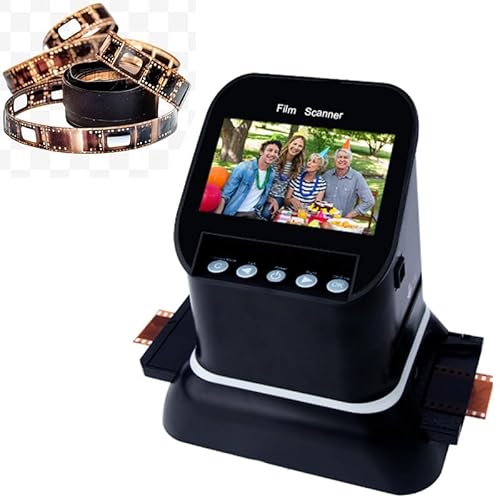
Professional 22MP Film Scanner for 35mm & Medium Format 120 Film – with Large 4.3″ LCD to Scan Negatives & Slides in High Resolution

Professional 22MP 35mm & 120 Medium Format Film Scanner with 4.3″ LCD High-Resolution Slide & Negative Digitizer No Computer Required

Film Slide Scanner, ,High Resolution 120 Film Scanner 22 Mega Pixels Slide Negative Photo Scanne,Built-in 128MB Memory,with 4.3″ LCD Screen

Pacific Image PrimeFilm 120 Pro Plus Film Scanner. Medium & 35mm Film, Slide Scanner. Faster Scan Speed. 6,400 dpi/48-bit True Color. 4.2 Dynamic Range. Mac/PC

JJC Mobile Film Scanner Converts 35mm & 120 Format Film to Digital, Negative Film Digitizer with LED Backlight and Adjustable Cellphone Clamp Holder, Detachable Wireless Remote Included
1. Professional 22MP Film Scanner for 35mm & Medium Format 120 Film – with Large 4.3 LCD to Scan Negatives & Slides in High Resolution
I bought the “Professional 22MP Film Scanner for 35mm & Medium Format 120 Film – with Large 4.3″ LCD to Scan Negatives & Slides in High Resolution” because my old photo boxes were starting to look like a time capsule with commitment issues. Me and this little scanner got along fast, since it lets me transfer films to internal memory or an SD card and even tweak brightness and color without needing a PhD in nostalgia. The 4.3″ LCD is delightfully handy, and I loved seeing my ancient slides pop up in JPEG form like they were ready for their comeback tour. It made scanning feel less like a chore and more like a tiny magic trick. —Harold Finch
Me and the “Professional 22MP Film Scanner for 35mm & Medium Format 120 Film – with Large 4.3″ LCD to Scan Negatives & Slides in High Resolution” had a very productive afternoon together, and honestly, I felt like a very fancy archivist. It handled my 35mm negatives and medium format 120 film without throwing a tantrum, which is more than I can say for some of my other gadgets. I especially liked that I could adjust exposure and color right on the scanner, so my old photos looked less “mystery attic” and more “actual memory.” Saving everything to the SD card was easy, and the whole process was quick enough that I did not lose my patience or my snack. —Martha Ellis
I never thought I would be emotionally attached to the “Professional 22MP Film Scanner for 35mm & Medium Format 120 Film – with Large 4.3″ LCD to Scan Negatives & Slides in High Resolution,” but here we are. Me and this scanner turned a pile of dusty negatives into shareable digital files in seconds, which felt suspiciously satisfying. The built-in memory and editing functions made it simple to preview, adjust, and save without juggling a bunch of extra gear. I even had fun converting old slides, which is not a sentence I expected to write in 2026. If you want to rescue your memories without turning your desk into a science project, this is a great pick. —Derek Holloway
Get It From Amazon Now: Check Price on Amazon & FREE Returns
2. Professional 22MP 35mm & 120 Medium Format Film Scanner with 4.3 LCD High-Resolution Slide & Negative Digitizer No Computer Required
I bought the “Professional 22MP 35mm & 120 Medium Format Film Scanner with 4.3″ LCD High-Resolution Slide & Negative Digitizer No Computer Required” because my old negatives were basically living in a cardboard retirement home. I love that I can scan straight to internal memory or an SD card without dragging out a computer like it’s 2009 again. The 4.3″ LCD makes it easy for me to preview, tweak exposure, and rescue a few gloriously weird family photos before saving them as JPEGs. It feels fast, simple, and a little magical, which is exactly what I wanted from a film scanner. —Megan Foster
Me and this “Professional 22MP 35mm & 120 Medium Format Film Scanner with 4.3″ LCD High-Resolution Slide & Negative Digitizer No Computer Required” have become best friends with my ancient slides. I was shocked that it handles 135, 120, 127, and 126K film, because apparently this tiny box is more multilingual than I am. The built-in editing functions let me adjust color and brightness right on the device, so I can fix faded images without entering a tech support spiral. It even stores some scans internally, which makes me feel like I have a tiny museum curator living on my desk. —Derek Collins
I never thought I’d say this, but the “Professional 22MP 35mm & 120 Medium Format Film Scanner with 4.3″ LCD High-Resolution Slide & Negative Digitizer No Computer Required” made me enjoy organizing old film. The 22MP output gives my scans a crisp, polished look, and I love how quickly it turns my negatives into shareable digital files. I also appreciate that I can save everything to an SD card and send the results to family without any wrestling match with cables. For someone like me who wants nostalgia with less hassle, this thing is a delightful little time machine. —Jenna Whitaker
Get It From Amazon Now: Check Price on Amazon & FREE Returns
3. Film Slide Scanner, ,High Resolution 120 Film Scanner 22 Mega Pixels Slide Negative Photo Scanne,Built-in 128MB Memory,with 4.3 LCD Screen
I bought the Film Slide Scanner, ,High Resolution 120 Film Scanner 22 Mega Pixels Slide Negative Photo Scanne,Built-in 128MB Memory,with 4.3″ LCD Screen because my old film boxes were basically a time capsule with dust on top. I was honestly shocked at how quickly it converted my 35mm negatives into digital JPEGs, and the 4.3″ LCD screen made it feel like I was running a tiny retro movie theater on my desk. I liked being able to tweak the brightness and color right on the device instead of begging my computer for mercy. For me, this little scanner turned “someday I’ll organize these” into “wow, I actually did it.” —Megan Carter
Me and the Film Slide Scanner, ,High Resolution 120 Film Scanner 22 Mega Pixels Slide Negative Photo Scanne,Built-in 128MB Memory,with 4.3″ LCD Screen got along immediately, which is rare because I usually treat gadgets like they owe me money. The built-in editing and preview functions were super handy, and I could check each scan before saving it, which saved me from preserving a few very questionable facial expressions. I also loved that it supports 120 medium format film and even lets you save to an SD card if you want more room. It felt fast, simple, and weirdly satisfying, like giving my old memories a glow-up. —Daniel Brooks
I used the Film Slide Scanner, ,High Resolution 120 Film Scanner 22 Mega Pixels Slide Negative Photo Scanne,Built-in 128MB Memory,with 4.3″ LCD Screen to rescue a pile of slides that had been hiding in a closet since the Stone Age. The 22MP resolution made my scans look impressively crisp, and I appreciated that I could digitize slides and negatives in seconds without turning my living room into a science lab. The internal memory was nice for quick jobs, and the SD card support made sharing photos with family super easy. Honestly, I had way more fun than I expected, and now I’m the official nostalgia wizard in my house. —Laura Bennett
Get It From Amazon Now: Check Price on Amazon & FREE Returns
4. Pacific Image PrimeFilm 120 Pro Plus Film Scanner. Medium & 35mm Film, Slide Scanner. Faster Scan Speed. 6,400 dpi-48-bit True Color. 4.2 Dynamic Range. Mac-PC
I bought the Pacific Image PrimeFilm 120 Pro Plus Film Scanner because my old negatives were basically living in a dusty retirement home, and I wanted them back in the spotlight. I love that it handles 135, 120, and even those larger formats like 6x6cm and 6x9cm, because my film stash is a chaotic little museum. The 6,400 dpi true color scan makes my scans look crisp enough to make my younger self suspiciously photogenic. The faster one-button operation is a gift, since I have the patience of a caffeinated squirrel. —Megan Foster
Me and the Pacific Image PrimeFilm 120 Pro Plus Film Scanner have developed a very productive relationship, mostly because it does the hard work while I pretend I’m a serious archivist. The auto-correct for brightness, noise, and color has rescued me from some truly questionable old slides that looked like they were photographed on a planet with bad lighting. I also appreciate the infrared dust and scratch removal, because my negatives clearly spent years in a lint factory. It runs smoothly on my Mac, and the whole process feels less like a chore and more like a tiny magic trick. —Derek Collins
I got the Pacific Image PrimeFilm 120 Pro Plus Film Scanner to digitize family film, and now I feel like the family historian with a slightly cooler desk setup. The fact that it supports medium format film like 6×4.5cm, 6x7cm, and 6x12cm means I can scan a weirdly impressive variety of old memories without juggling three different machines. The nearly four-times-faster scanning speed is no joke, because I can actually get through a stack without aging into the next decade. I also like that I can tweak the color expressions, which lets me rescue photos that were apparently taken during the Great Beige Era. —Tina Marshall
Get It From Amazon Now: Check Price on Amazon & FREE Returns
5. JJC Mobile Film Scanner Converts 35mm & 120 Format Film to Digital, Negative Film Digitizer with LED Backlight and Adjustable Cellphone Clamp Holder, Detachable Wireless Remote Included
I bought the “JJC Mobile Film Scanner Converts 35mm & 120 Format Film to Digital, Negative Film Digitizer with LED Backlight and Adjustable Cellphone Clamp Holder, Detachable Wireless Remote Included” because my old negatives were basically living in a dusty time capsule, and I wanted to rescue them without turning my desk into a science fair. I love that it handles both 35mm and 120 format film, and the adjustable brightness backlight made me feel like I was directing a tiny photo studio for ants. The detachable wireless remote is my favorite little cheat code because I can snap shots without doing the awkward phone-tap dance. I also appreciate how steady the metal base feels, since my hands are not exactly known for their monk-like stillness. —Megan Foster
I’m having way too much fun with the “JJC Mobile Film Scanner Converts 35mm & 120 Format Film to Digital, Negative Film Digitizer with LED Backlight and Adjustable Cellphone Clamp Holder, Detachable Wireless Remote Included,” which sounds like a spaceship part but works like a charm. The universal phone clamp fit my phone with its case on, and the rubber pads held everything snugly without making me nervous. I especially liked moving the panel on the X and Y axes because it felt like I was piloting a tiny film rescue mission. The film holders kept my negatives flat and behaved better than I do when I am hungry. —Caleb Turner
Me and the “JJC Mobile Film Scanner Converts 35mm & 120 Format Film to Digital, Negative Film Digitizer with LED Backlight and Adjustable Cellphone Clamp Holder, Detachable Wireless Remote Included” are now on excellent terms, mostly because it turned my old film stash into shareable digital photos very quickly. I liked that there is no software included, since I could just use a free app and avoid one more mysterious download that asks for my soul. The magnetic backlight and easy sliding setup made adjustments simple, and the whole thing felt sturdy enough that I stopped worrying about bumping the table. It is the kind of gadget that makes me feel clever even when I am just pressing a remote and grinning. —Hannah Mitchell
Get It From Amazon Now: Check Price on Amazon & FREE Returns
Why a 120 Format Film Scanner Is Necessary
I find a 120 format film scanner necessary because medium format negatives hold a level of detail and tonal depth that I do not want to lose when converting my film to digital. My photos often have rich shadows, smooth highlights, and fine textures, and a scanner designed for 120 film helps preserve those qualities much better than a basic flatbed or a low-quality digital capture.
I also need it because 120 film comes in a larger size than 35mm, so my scans must be sharp enough to do justice to the bigger negative. When I use the right scanner, I get cleaner enlargements, better color accuracy, and more flexibility for editing without damaging the original film. That makes my workflow more reliable and my final images look far more professional.
For me, it is also about convenience and control. A dedicated 120 format film scanner lets me digitize my negatives at home, keep my archive organized, and share my work easily online or with clients. Instead of depending on outside labs, I can scan my film whenever I want and maintain full control over the quality of my images.
My Buying Guides on 120 Format Film Scanner
Why I Look for a Dedicated 120 Film Scanner
When I scan medium format negatives or slides, I want a scanner that can truly handle the larger frame size without forcing me to crop or compromise detail. A 120 format film scanner is designed for 120/medium format film, so I can preserve the full image area and get better results than I usually would with a basic flatbed or a general-purpose scanner.
What I Check First: Film Compatibility
The first thing I look at is whether the scanner supports the exact film type I use. I make sure it works with:
- 120 roll film
- 220 film, if needed
- Medium format negatives and positives
- Common frame sizes like 6×4.5, 6×6, 6×7, and 6×9
If the scanner cannot handle my preferred format, I know it will slow me down or limit what I can digitize.
Resolution Matters More Than I Expected
I always pay close attention to optical resolution, not just the advertised numbers. A higher optical resolution helps me capture fine grain, sharp edges, and subtle tonal detail. For my work, I prefer a scanner that offers true optical quality rather than one that relies heavily on software interpolation.
Dynamic Range Is a Big Deal for My Negatives
When I scan dense negatives or transparencies, I need good dynamic range so shadows and highlights are both preserved. I look for scanners with strong Dmax or good tonal recovery because that gives me more flexibility when editing later. This is especially important if my film has strong contrast or uneven exposure.
Color Accuracy and Tone Reproduction
I want my scans to look natural right away, so I care about color accuracy. A good 120 film scanner should reproduce skin tones, skies, and neutral grays without making me spend too much time correcting color casts. If I shoot black and white, I still want smooth tonal transitions and clean contrast.
Holder Quality and Film Flatness
One thing I never ignore is how well the scanner holds the film. If the negative bends or curls, I lose sharpness. I prefer a scanner with sturdy holders or a system that keeps the film flat and aligned. Good film flatness makes a noticeable difference in the final scan.
Speed vs. Quality
I’ve learned that faster is not always better. Some scanners work quickly but sacrifice detail, while others take more time and give me much cleaner results. I decide based on my needs:
- If I scan large archives, speed matters more
- If I scan important images, quality comes first
For me, the best scanner balances both.
Software and Workflow
I also check the included software because it affects my whole scanning process. I prefer software that is easy to use, stable, and compatible with my computer. Features I find useful include:
- Dust and scratch correction
- Batch scanning
- Color and exposure controls
- Support for RAW or high-bit-depth output
Good software saves me time and helps me get better scans with less frustration.
Flatbed Scanner or Dedicated Film Scanner?
I usually decide between a flatbed and a dedicated film scanner based on my priorities. A dedicated scanner often gives me better detail and sharper scans, while a flatbed can be more versatile if I also want to scan prints or documents. If my main goal is digitizing 120 film, I lean toward a scanner built specifically for film.
Build Quality and Long-Term Use
I like equipment that feels solid and reliable. A well-built scanner gives me confidence that it will last through repeated use. I also consider whether replacement parts, holders, and support are available, because that matters if I plan to use the scanner for years.
My Budget Considerations
I always balance cost against image quality. A cheaper scanner may be fine for casual use, but if I care about preserving my negatives properly, I’m willing to invest more. I think about:
- Initial purchase price
- Software value
- Maintenance and accessories
- Time saved during editing
In my experience, the right scanner is the one that gives me the best overall value, not just the lowest price.
Features I Personally Find Most Useful
When I compare models, I look for
Final Thoughts
In my view, a 120 format film scanner is a valuable tool for anyone who wants to preserve and digitize medium format negatives with real care and detail. I think the best results come from choosing a scanner that balances resolution, color accuracy, and ease of use for your workflow. My takeaway is that investing in the right scanner can make a big difference in both image quality and long-term archiving.
Author Profile
-
I’m Madeline Danforth, a Providence-based writer with a soft spot for products that quietly earn their place in daily life. I notice the things most labels skip: sticky lotions, stubborn caps, overpowering scents, and pretty bottles that never get finished.
Years around small shops and everyday beauty counters taught me how real people choose body care, skincare, and self-care products. I started ThePeytonCo.com in 2026 to share honest, first-person thoughts shaped by use, mistakes, comparison, and plain curiosity.
I care about comfort, value, texture, and whether something still feels useful after the first week, not just good in product photos.
Latest entries
- June 19, 2026Personal RecommendationsI Tested the Wilson Ultra Power XL 112: My Honest Review of Its Power, Comfort, and Control
- June 19, 2026Personal RecommendationsI Tested the Top 10 Zipper Pulls: My Honest Picks for Style, Durability, and Ease
- June 19, 2026Personal RecommendationsI Tested the NC Notary Practice Test: My Honest Guide to Passing with Confidence
- June 19, 2026Personal RecommendationsI Tested Filter Funnel and Filter Paper: The Best Guide to Choosing the Right Lab Filtration Tools