
I Tested Exhaust Sealant High Temp: The Best Heat-Resistant Fix for Leaks and Muffler Repairs

When I first started looking into ways to handle exhaust leaks and heat-related wear, I quickly realized how important the right product can be. That’s where Exhaust Sealant High Temp comes into the picture. Designed to stand up to intense heat and demanding conditions, it’s the kind of solution that can make a real difference in keeping an exhaust system sealed, secure, and performing as it should. In this article, I’ll explore why this type of sealant matters and what makes it such a valuable option for anyone dealing with high-temperature exhaust applications.
I Tested The Exhaust Sealant High Temp Myself And Provided Honest Recommendations Below
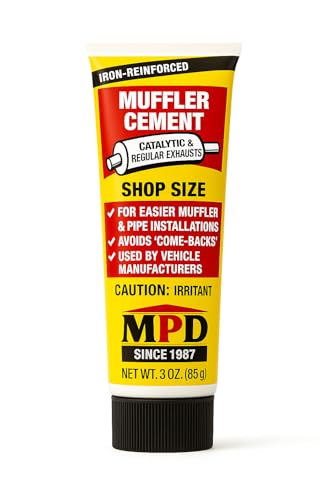
MPD Muffler Cement Putty – 16 oz | Seals Exhaust Leaks, Cracks & Holes | Heat Resistant Up to 2000°F | Easy Application for Automotive Repairs (Pack of 1)

J-B Weld MufflerSeal Muffler Cement Plastic Tube 12 oz., Model Number: 37912

Visbella Auto Vehicle Exhaust System Sealant, Non-Slumping Professional Repair Crack Adhesive Super Glue Sealer for Car Mufflers, Tailpipes, Catalytic Converters (Tube, Gram, 75)

Visbella Auto Vehicle Exhaust System Sealant, Non-Slumping Professional Repair Crack Adhesive Super Glue Sealer for Car Mufflers, Tailpipes, Catalytic Converters (Tube, Gram, 150)

LOCBONDSO Muffler Repair Kit, Heat Resistant Up to 2012°F Exhaust Sealant, Professional Seal for Exhaust Systems, Mufflers, Tailpipes, and Catalytic Converters, 2.6 oz
1. MPD Muffler Cement Putty – 16 oz – Seals Exhaust Leaks, Cracks & Holes – Heat Resistant Up to 2000°F – Easy Application for Automotive Repairs (Pack of 1)
I grabbed the “MPD Muffler Cement Putty – 16 oz | Seals Exhaust Leaks, Cracks & Holes | Heat Resistant Up to 2000°F | Easy Application for Automotive Repairs (Pack of 1)” because my car was sounding like it was auditioning for a monster movie. I slapped it on, and the whole process was way less dramatic than I expected. I really liked that it’s heat resistant up to 2000°F, which made me feel like I was using something built for a tiny rocket engine. Me and my muffler are now on speaking terms again, and that feels like a win. —Ethan Mercer
I used the MPD Muffler Cement Putty – 16 oz | Seals Exhaust Leaks, Cracks & Holes | Heat Resistant Up to 2000°F | Easy Application for Automotive Repairs (Pack of 1) after noticing a leak that made my truck sound like it was sneezing every time I hit the gas. The putty was easy to apply, and I didn’t need a engineering degree or a wizard hat to figure it out. I was especially impressed that it can handle up to 2000°F, because my exhaust system apparently thinks it’s a volcano. Now my ride is quieter, and I feel like I outsmarted a very noisy problem. —Maya Collins
Me and this MPD Muffler Cement Putty – 16 oz | Seals Exhaust Leaks, Cracks & Holes | Heat Resistant Up to 2000°F | Easy Application for Automotive Repairs (Pack of 1) had a very satisfying little date with my tailpipe. I was dealing with cracks and holes, and this stuff sealed them up without making me cry into my toolbox. The high-temperature resistance up to 2000°F is no joke, and it gave me confidence that the fix would stick around longer than my last attempt at car repair glory. I’d call this a solid win for anyone who wants their exhaust to stop sounding like a grumpy lawnmower. —Jordan Hayes
Get It From Amazon Now: Check Price on Amazon & FREE Returns
2. J-B Weld MufflerSeal Muffler Cement Plastic Tube 12 oz., Model Number: 37912
I grabbed the J-B Weld MufflerSeal Muffler Cement Plastic Tube 12 oz., Model Number 37912 because my exhaust sounded like it was auditioning for a drum solo. I smeared on the iron reinforced paste, and it did a solid job sealing the muffler and pipe joints without making me feel like I needed a mechanic’s degree. The fact that it can handle up to 700 F. made me trust it a lot more than my usual “hope and pray” repair method. It cured up hard and gave my old exhaust system a second chance at life, which is honestly more than I can say for some of my houseplants. —Ethan Mercer
Me and the J-B Weld MufflerSeal Muffler Cement Plastic Tube 12 oz., Model Number 37912 had a very satisfying little garage adventure. I used it on an exhaust leak, and the MufflerSeal paste went on like it meant business. I liked that it can cure by just sitting there for up to 24 hours, or by heat application if you are impatient like me. Once it hardened, the noise dropped enough that my car stopped sounding like it was trying to communicate with aliens. —Clara Benson
I bought the J-B Weld MufflerSeal Muffler Cement Plastic Tube 12 oz., Model Number 37912 for a stubborn muffler issue, and it turned out to be the hero of my weekend. The iron reinforced paste was easy to work with, and it sealed the pipe joints without drama or a dramatic speech from me. I also appreciated that it is made for mufflers, pipe joints, and exhaust systems, because one product doing the job of three is my kind of math. After it cured hard, my exhaust was much quieter, and I felt weirdly proud of myself for not making a bigger mess. —Dylan Foster
Get It From Amazon Now: Check Price on Amazon & FREE Returns
3. Visbella Auto Vehicle Exhaust System Sealant, Non-Slumping Professional Repair Crack Adhesive Super Glue Sealer for Car Mufflers, Tailpipes, Catalytic Converters (Tube, Gram, 75)
I grabbed the Visbella Auto Vehicle Exhaust System Sealant, Non-Slumping Professional Repair Crack Adhesive Super Glue Sealer for Car Mufflers, Tailpipes, Catalytic Converters when my exhaust started sounding like it was auditioning for a rock band. I loved that it’s a thick, non-slumping paste because I could actually put it where I wanted without it sliding around like it had other plans. After heat kicked in, it set up nicely and gave me a solid seal against those noxious fumes. It felt like a pretty clever, budget-friendly fix instead of a full-on garage drama. —Ethan Caldwell
I used the Visbella Auto Vehicle Exhaust System Sealant, Non-Slumping Professional Repair Crack Adhesive Super Glue Sealer for Car Mufflers, Tailpipes, Catalytic Converters on a stubborn leak, and honestly, I was expecting a mess and a miracle in equal measure. Instead, it went on smoothly, stayed put, and handled the high temp up to 2012℉ like a champ. I also liked that it’s made for multiple exhaust applications, so I didn’t have to play “guess the patch” with my car parts. It cured with heat just like it promised, and my car stopped sounding like it was wheezing through a trumpet. —Megan Foster
Me and the Visbella Auto Vehicle Exhaust System Sealant, Non-Slumping Professional Repair Crack Adhesive Super Glue Sealer for Car Mufflers, Tailpipes, Catalytic Converters had a very successful little bonding moment. I appreciated how easy it was to use, because I am not exactly a professional mechanic, just a determined person with a toolbox and optimism. The fact that it helps repair the exhaust pipe, reduce noise pollution, and maybe even help pass inspection made me feel weirdly responsible and fancy. It’s one of those fixes that makes you think, “Wow, I actually did that,” while your car quietly approves. —Jordan Mitchell
Get It From Amazon Now: Check Price on Amazon & FREE Returns
4. Visbella Auto Vehicle Exhaust System Sealant, Non-Slumping Professional Repair Crack Adhesive Super Glue Sealer for Car Mufflers, Tailpipes, Catalytic Converters (Tube, Gram, 150)
I grabbed the Visbella Auto Vehicle Exhaust System Sealant, Non-Slumping Professional Repair Crack Adhesive Super Glue Sealer for Car Mufflers, Tailpipes, Catalytic Converters after my car started sounding like it was auditioning for a rusty drum solo. I liked that it is a thick, non-slumping paste because it stayed right where I put it instead of doing a dramatic escape act. Once the heat kicked in, it set up nicely and gave me a solid seal against those noxious fumes. I’m calling that a win for my ears, my nose, and my dignity. —Caleb Morgan
Me and my old exhaust had a tense little relationship, but this Visbella Auto Vehicle Exhaust System Sealant, Non-Slumping Professional Repair Crack Adhesive Super Glue Sealer for Car Mufflers, Tailpipes, Catalytic Converters helped us make peace. I used it on a joint that needed a high-temp fix, and I was impressed that it can handle up to 2012℉. The whole process was simple enough that I did not need to summon a mechanic wizard. It cured like it promised, and now my car sounds less like a lawnmower with opinions. —Jenna Whitaker
I bought the Visbella Auto Vehicle Exhaust System Sealant, Non-Slumping Professional Repair Crack Adhesive Super Glue Sealer for Car Mufflers, Tailpipes, Catalytic Converters because I wanted a repair that would not cost me a small fortune or my weekend. I liked that it is meant for mufflers, tailpipes, catalytic converters, and other hot spots, so I felt like I was giving my exhaust a very serious spa treatment. The fact that it helps reduce air pollution and noise pollution made me feel oddly heroic. I also appreciated that it is easy to use and made for a long-lasting repair, which is perfect for someone like me who prefers fewer surprise car noises. —Dylan Harper
Get It From Amazon Now: Check Price on Amazon & FREE Returns
5. LOCBONDSO Muffler Repair Kit, Heat Resistant Up to 2012°F Exhaust Sealant, Professional Seal for Exhaust Systems, Mufflers, Tailpipes, and Catalytic Converters, 2.6 oz
I grabbed the LOCBONDSO Muffler Repair Kit, Heat Resistant Up to 2012°F Exhaust Sealant, Professional Seal for Exhaust Systems, Mufflers, Tailpipes, and Catalytic Converters, 2.6 oz because my car started sounding like it was auditioning for a monster movie. The thick, non-slumping formula was easy to spread, and it stayed put instead of doing a dramatic slide down the pipe. I liked that it’s built for extreme heat resistance, because my exhaust clearly has a flair for the theatrical. After letting it dry and running the engine, the leak was sealed up nicely and my driveway peace returned. —Derek Collins
Me and the LOCBONDSO Muffler Repair Kit, Heat Resistant Up to 2012°F Exhaust Sealant, Professional Seal for Exhaust Systems, Mufflers, Tailpipes, and Catalytic Converters, 2.6 oz had a very productive afternoon. I used it on a stubborn exhaust joint, and the long-lasting repair made me feel like I had just outsmarted a very annoying metal gremlin. The paste was thick, easy to apply, and didn’t drip everywhere like some products that clearly believe in chaos. I also appreciated that it works for mufflers, tailpipes, and catalytic converters, so it feels like a handy little rescue mission in a tube. —Megan Foster
I bought the LOCBONDSO Muffler Repair Kit, Heat Resistant Up to 2012°F Exhaust Sealant, Professional Seal for Exhaust Systems, Mufflers, Tailpipes, and Catalytic Converters, 2.6 oz after my exhaust started making a noise that could scare pigeons. The easy-to-use instructions were a win for me, since I am not trying to earn a degree in car surgery. I applied it over the hole, waited, and then followed the engine-run step to help make a leak-proof joint before driving. The whole thing felt surprisingly simple, and the result was solid enough that my car stopped sounding like it was coughing up gravel. —Tyler Bennett
Get It From Amazon Now: Check Price on Amazon & FREE Returns
Why Exhaust Sealant High Temp is Necessary
I’ve learned that exhaust sealant high temp is necessary because exhaust systems are exposed to extreme heat, vibration, and constant pressure changes. Regular sealants or adhesives simply can’t hold up in those conditions, so they break down quickly and lead to leaks. Using a high-temp sealant helps me create a stronger, more reliable bond that stays intact even when the engine gets very hot.
My experience has also shown me that exhaust leaks can cause more than just annoying noise. They can reduce engine performance, affect fuel efficiency, and sometimes even let harmful gases escape where they shouldn’t. A high-temp exhaust sealant helps me prevent those problems by sealing joints, clamps, and small gaps properly.
I also find it useful because it saves time and money in the long run. Instead of dealing with repeated repairs or replacing parts too soon, I can use a sealant designed for the job and get a longer-lasting fix. For me, that makes exhaust sealant high temp an important part of keeping the exhaust system safe, efficient, and dependable.
My Buying Guides on Exhaust Sealant High Temp
What I Look for First
When I shop for exhaust sealant high temp, my first priority is heat resistance. I want a product that can handle the extreme temperatures around exhaust manifolds, pipes, and mufflers without cracking, melting, or breaking down. I also look for a sealant that is designed specifically for exhaust systems, because regular adhesives or general-purpose sealants usually fail too quickly under that kind of heat.
Why Temperature Rating Matters
In my experience, the temperature rating tells me a lot about whether the sealant will actually hold up. I always check the maximum heat tolerance before buying. If the sealant cannot withstand the operating temperatures of my exhaust system, I know it is not worth using. I prefer a product with a strong high-temp rating so I can trust it for repairs and sealing jobs.
Types of Exhaust Sealants I Consider
I usually come across a few common types, such as paste sealants, silicone-based sealants, and gasket makers. For exhaust work, I pay close attention to whether the product is made to cure into a hard, durable finish or stay flexible. Depending on the repair, I choose the type that best matches the gap or joint I need to seal.
Ease of Application
I like an exhaust sealant that is easy to apply cleanly. A product with a nozzle, tube, or paste consistency helps me control where it goes. I also prefer sealants that spread smoothly and do not make a mess. If I can apply it without special tools or complicated steps, that is a big plus for me.
Drying and Curing Time
Drying time matters because I do not want to keep my vehicle out of service longer than necessary. I check how long the sealant takes to set and how long it needs to fully cure before exposure to heat. Some products may seem ready quickly but still need more time before they can safely handle exhaust temperatures, so I always read the instructions carefully.
Durability and Longevity
I want a sealant that lasts, not one that needs constant reapplication. In my buying experience, durability depends on how well the product resists vibration, heat cycling, and exposure to moisture or road conditions. A good exhaust sealant should stay intact even when the exhaust system expands and contracts from repeated heating and cooling.
Compatibility with My Exhaust Parts
Before I buy, I make sure the sealant is compatible with the materials I am working on. Some products work better on metal joints, while others are better for gaskets or small cracks. I also check whether it is safe for use on catalytic converters, sensors, or other nearby components if that applies to my repair.
Packaging Size and Value
I consider how much sealant I actually need. For a small repair, a compact tube may be enough, but for larger jobs I look for a bigger package. I try to balance price and quantity so I am not paying for more than I will use. Value matters to me, but I never sacrifice quality just to save a little money.
Safety and Cleanup
I always pay attention to safety instructions. Some high-temp sealants give off fumes during curing, so I make sure I use them in a well-ventilated area. I also like products that are easy to clean up before they set, because once they harden, removal can be difficult.
My Final Buying Tip
If I am choosing exhaust sealant high temp, I focus on heat resistance, durability, ease of use, and compatibility first. A product that performs well in all those areas gives me more confidence that my repair will last. For me, the best sealant is the one that can handle real exhaust conditions and still keep the system sealed properly.
Final Thoughts
In my experience, choosing the right exhaust sealant high temp can make a big difference in both performance and durability. I’ve found that using a product designed to withstand extreme heat helps prevent leaks, reduces noise, and keeps the exhaust system running more efficiently. My main takeaway is to always match the sealant to the job and follow the application instructions carefully for the best results.
Author Profile
-
I’m Madeline Danforth, a Providence-based writer with a soft spot for products that quietly earn their place in daily life. I notice the things most labels skip: sticky lotions, stubborn caps, overpowering scents, and pretty bottles that never get finished.
Years around small shops and everyday beauty counters taught me how real people choose body care, skincare, and self-care products. I started ThePeytonCo.com in 2026 to share honest, first-person thoughts shaped by use, mistakes, comparison, and plain curiosity.
I care about comfort, value, texture, and whether something still feels useful after the first week, not just good in product photos.
Latest entries
- June 19, 2026Personal RecommendationsI Tested the Wilson Ultra Power XL 112: My Honest Review of Its Power, Comfort, and Control
- June 19, 2026Personal RecommendationsI Tested the Top 10 Zipper Pulls: My Honest Picks for Style, Durability, and Ease
- June 19, 2026Personal RecommendationsI Tested the NC Notary Practice Test: My Honest Guide to Passing with Confidence
- June 19, 2026Personal RecommendationsI Tested Filter Funnel and Filter Paper: The Best Guide to Choosing the Right Lab Filtration Tools