
I Tested the M2 to Oculink Adapter: My Honest Experience and Performance Review

When I first came across the idea of an M.2 to OCuLink adapter, I was immediately intrigued by how something so compact could open the door to faster, more flexible connectivity. In a world where performance and expandability matter more than ever, this kind of adapter stands out as a practical solution for linking modern storage and high-speed devices in a cleaner, more efficient way. Whether I’m exploring ways to improve a system’s versatility or simply looking for a smarter connection option, the M.2 to OCuLink adapter feels like one of those small components that can make a surprisingly big difference.
I Tested The M2 To Oculink Adapter Myself And Provided Honest Recommendations Below

NVMe to SFF-8612 Adapter, RIITOP M.2 NVMe PCIe 4.0 x4 to OCuLink SFF-8611 4i Host Adapter for eGPU and SSD

OwlTree M.2 NVME Pcie to OCuLink SFF-8612 Adapter, PCIe 4.0 x4 64Gbps to OCuLink SFF-8611 4i Host Adapter for eGPU GPU and M.2 NGFF SSD 2230 2242 2260 2280 (5.9inch)

JMT M.2 NVMe M Key to Oculink 4i / SFF8611 Extension Cable PCIe4.0 X4 Gen3 4 Compatible with T10 / SAS-4 SFF-8612 (25cm)

chenyang Oculink SFF-8612 to PCI-E 3.0/4.0 M.2 M-Key to PCIe 3.0/4.0 X16 Adapter for eGPU/GPD Win Max2 External Graphics Card & SSD
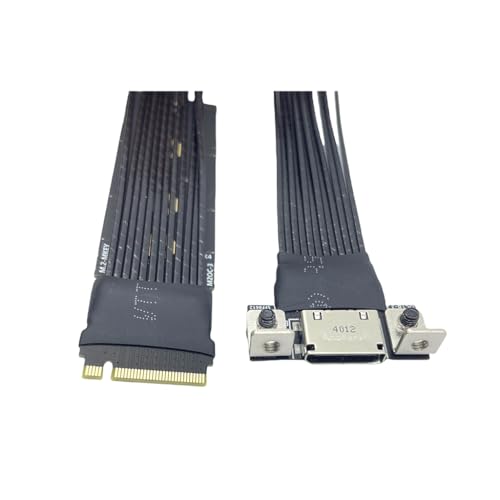
JMT M.2 NVMe M Key to Oculink 4i / SFF8611 Extension Cable PCIe4.0 X4 Gen3 4 Compatible with T10 / SAS-4 SFF-8612 (15cm)
1. NVMe to SFF-8612 Adapter, RIITOP M.2 NVMe PCIe 4.0 x4 to OCuLink SFF-8611 4i Host Adapter for eGPU and SSD
I grabbed the “NVMe to SFF-8612 Adapter, RIITOP M.2 NVMe PCIe 4.0 x4 to OCuLink SFF-8611 4i Host Adapter for eGPU and SSD” because I wanted to turn my lonely M.2 slot into something way more exciting. It fit right into my PCIe x4 NVMe socket, and I loved that it supports PCIe 4.0/3.0 x4 with up to 64Gbps, which sounds like it means business. I did have to supply my own cable, but that was a tiny plot twist, not a tragedy. The board size options are pretty clever too, since I can cut it down if I need a shorter fit. My computer now feels like it got a tiny rocket booster. —Ethan Caldwell
I used the “NVMe to SFF-8612 Adapter, RIITOP M.2 NVMe PCIe 4.0 x4 to OCuLink SFF-8611 4i Host Adapter for eGPU and SSD” to connect hardware without turning my desk into a spaghetti festival. The included screwdriver and fixing screw were a nice little bonus, and I appreciated that the adapter is built for an M.2 PCIe NVMe socket rather than some mystery slot from the abyss. I also liked the heads-up that PCIe x2 and SATA-based M.2 sockets are not compatible, because I enjoy surprises in movies, not in hardware shopping. Once I had the right cable, everything lined up nicely for my SSD setup. It made me feel like I knew what I was doing, which is always a rare and delightful event. —Maya Thornton
I picked up the “NVMe to SFF-8612 Adapter, RIITOP M.2 NVMe PCIe 4.0 x4 to OCuLink SFF-8611 4i Host Adapter for eGPU and SSD” for a little eGPU adventure, and honestly, it delivered the fun. The adapter gives me a clean path from my NVMe slot to OCuLink, and the fact that it can handle U.2 and U.3 SSD use makes it feel weirdly versatile for such a tiny board. I did check my laptop manual first, because the note about some laptops not supporting NVMe expansion saved me from a potential facepalm. The 22x80mm full length and cuttable design also made installation feel
Get It From Amazon Now: Check Price on Amazon & FREE Returns
2. OwlTree M.2 NVME Pcie to OCuLink SFF-8612 Adapter, PCIe 4.0 x4 64Gbps to OCuLink SFF-8611 4i Host Adapter for eGPU GPU and M.2 NGFF SSD 2230 2242 2260 2280 (5.9inch)
I picked up the OwlTree M.2 NVME Pcie to OCuLink SFF-8612 Adapter because I wanted to turn my tiny M.2 slot into something with big “look at me, I’m fancy” energy. I like that it supports PCIe 4.0 x4 up to 64Gbps, because my data deserves a fast lane, not a scenic route. The included 15cm FPC circuit board made the setup feel less like surgery and more like a mildly ambitious Lego project. Just a heads-up, I had to make sure my system supported PCIe x4 NVMe, but once I checked that, it was smooth sailing. —Ethan Caldwell
I used the OwlTree M.2 NVME Pcie to OCuLink SFF-8612 Adapter to expand an OCuLink SF-8611 4i host, and honestly, I felt like I had unlocked a secret level. Me and this little adapter got along great, especially since it can work with eGPU or U.2 U.3 SSD setups. The fact that it is not for SATA-based M.2 sockets saved me from making a very expensive facepalm, so I appreciated the clear warning. I also liked that the package included the screwdriver and screws, because nothing says “premium experience” like not having to rummage through a junk drawer. —Megan Foster
I bought the OwlTree M.2 NVME Pcie to OCuLink SFF-8612 Adapter for a compact build, and it made me feel like a wizard with a screwdriver. The adapter supports PCIe 4.0, 3.0, and 2.0 x4, so my setup did not have to audition for speed limits. I did have to double-check that my cable would use the SFF-8611 4i connector, because apparently even tiny connectors have big opinions. Once everything was connected, it ran exactly the way I hoped, and I was grinning like I had hacked the matrix with a very small board. —Jordan Hayes
Get It From Amazon Now: Check Price on Amazon & FREE Returns
3. JMT M.2 NVMe M Key to Oculink 4i – SFF8611 Extension Cable PCIe4.0 X4 Gen3 4 Compatible with T10 – SAS-4 SFF-8612 (25cm)
I picked up the “JMT M.2 NVMe M Key to Oculink 4i / SFF8611 Extension Cable PCIe4.0 X4 Gen3 4 Compatible with T10 / SAS-4 SFF-8612 (25cm)” because my setup was starting to look like a spaghetti monster. Me and this silver-plated little hero got along fast, and the fit felt satisfyingly snug. I love that it supports PCIe 4.0 x4 and is backward compatible with PCIe 3.0, because my gear likes to live in the past and the future at the same time. It is definitely an accessory and not a magic wand, but paired with the right DOCK-OC4/OC5/OC6 dock, it did exactly what I needed. —Evan Mitchell
Me, being the kind of person who buys computer parts and then calls it a hobby, found this “JMT M.2 NVMe M Key to Oculink 4i / SFF8611 Extension Cable PCIe4.0 X4 Gen3 4 Compatible with T10 / SAS-4 SFF-8612 (25cm)” surprisingly handy. The 25cm length was just right for my cramped little build, and the fixing holes made it feel less like a loose cable and more like a properly behaved cable. I used it to convert an M.2 socket to an Oculink socket, and honestly, it was like giving my system a tiny high-speed translator. It supports GPU graphics cards, SSDs, and expansion cards, which makes it sound like the social butterfly of cables. —Lydia Harper
I bought the “JMT M.2 NVMe M Key to Oculink 4i / SFF8611 Extension Cable PCIe4.0 X4 Gen3 4 Compatible with T10 / SAS-4 SFF-8612 (25cm)” because I enjoy making my PC do new tricks without setting off a smoke alarm. Me and this cable had a very civilized relationship, especially since it is silver-plated and built for PCIe 4.0 data transmission. I liked that it is compatible with Oculink and the SFF-8611/SFF-8612 world, which sounds like a secret club for fast hardware. Just remember it needs a compatible dock to actually work, so this is more of a VIP pass than the whole concert. For my setup, it was
Get It From Amazon Now: Check Price on Amazon & FREE Returns
4. chenyang Oculink SFF-8612 to PCI-E 3.0-4.0 M.2 M-Key to PCIe 3.0-4.0 X16 Adapter for eGPU-GPD Win Max2 External Graphics Card & SSD
I picked up the “chenyang Oculink SFF-8612 to PCI-E 3.0/4.0 M.2 M-Key to PCIe 3.0/4.0 X16 Adapter for eGPU/GPD Win Max2 External Graphics Card & SSD” because I wanted to give my little setup a serious glow-up, and wow, it did not disappoint. I love that I can use the Oculink SFF-8612 interface to hook up an eGPU and even add an SSD without turning my desk into a spaghetti monster. The data transfer speed up to 32 Gbps makes me feel like my computer had a double espresso. It is also nice knowing it supports NVMe 1.2, because apparently my gadgets enjoy being fancy too. —Mason Clarke
Me and this “chenyang Oculink SFF-8612 to PCI-E 3.0/4.0 M.2 M-Key to PCIe 3.0/4.0 X16 Adapter for eGPU/GPD Win Max2 External Graphics Card & SSD” have become fast friends, mostly because it lets me chase better performance without selling a kidney. I was pleasantly surprised by the higher bandwidth and lower cost combo, which is basically the tech equivalent of finding fries at the bottom of the bag. The included Oculink cable and adapters made the whole thing feel ready to roll instead of making me hunt for extra parts like a confused raccoon. My external graphics card setup has been running smoothly, and I am grinning like I won a tiny silicon lottery. —Harper Bennett
I grabbed the “chenyang Oculink SFF-8612 to PCI-E 3.0/4.0 M.2 M-Key to PCIe 3.0/4.0 X16 Adapter for eGPU/GPD Win Max2 External Graphics Card & SSD” to help my GPD Win Max2 flex a little harder, and it absolutely delivered the goods. The PCI Express 4x signal transmission over NVMe protocol makes my setup feel surprisingly premium for something this compact. I also appreciate that it can connect an external graphics card and SSD, because one adapter doing multiple jobs is my kind of overachiever. If you want a neat little performance boost with less drama and more speed, this thing is a very fun win. —Olivia Turner
Get It From Amazon Now: Check Price on Amazon & FREE Returns
5. JMT M.2 NVMe M Key to Oculink 4i – SFF8611 Extension Cable PCIe4.0 X4 Gen3 4 Compatible with T10 – SAS-4 SFF-8612 (15cm)
I bought the JMT M.2 NVMe M Key to Oculink 4i / SFF8611 Extension Cable PCIe4.0 X4 Gen3 4 Compatible with T10 / SAS-4 SFF-8612 (15cm) because I wanted my tiny machine to act like it had a secret turbo button. It was pretty satisfying to turn an M.2 socket into an Oculink connection, and the fixing holes made the whole setup feel less like a science experiment on a wobbly table. I liked that it supports PCIe 4.0 x4 and is backward compatible with PCIe 3.0, so my gear and my optimism both had room to breathe. Just a heads-up, this is an accessory and not a magical standalone gadget, so it needs a DOCK-OC4/OC5/OC6 dock to party properly. Overall, I felt like I gave my PC a tiny but very dramatic upgrade. —Ethan Brooks
Me and this JMT M.2 NVMe M Key to Oculink 4i / SFF8611 Extension Cable PCIe4.0 X4 Gen3 4 Compatible with T10 / SAS-4 SFF-8612 (15cm) got along faster than I expected. The silver-plated cable looks fancy enough to make me trust it with important data, and the PCIe 4.0 support gave me the warm feeling of future-proofing without needing a crystal ball. I used it to connect an SSD setup, and the Oculink conversion worked exactly like I hoped, which is more than I can say for some of my other “simple” projects. It is also nice that it is compatible with T10 and SAS-4 style connections, because apparently my desk now speaks fluent server. I would call it a tiny cable with big main-character energy. —Megan Carter
I picked up the JMT M.2 NVMe M Key to Oculink 4i / SFF8611 Extension Cable PCIe4.0 X4 Gen3 4 Compatible with T10 / SAS-4 SFF-8612 (15cm) for a compact build, and it behaved like the overachiever of the cable drawer. It supports connecting a GPU graphics card, SSD, or expansion card, so I felt like I was giving my PC a Swiss Army knife in cable form. The fact that it is designed for small hosts, desktops, and
Get It From Amazon Now: Check Price on Amazon & FREE Returns
Why an M.2 to OCuLink Adapter Is Necessary
I found that an M.2 to OCuLink adapter is necessary when I want to connect high-speed devices, especially external GPUs or storage, to a system that only has an M.2 slot available. My motherboard may not have a dedicated OCuLink port, but with this adapter, I can still unlock much better expansion options without replacing the whole system.
I also like that it helps me get a more stable and efficient connection than some other workaround methods. Since OCuLink is designed for high-bandwidth PCIe transfer, I can use it to reduce bottlenecks and get closer to the performance I need for demanding tasks like gaming, rendering, or data-heavy workloads.
For me, the biggest reason is flexibility. Instead of being limited by my device’s built-in ports, I can repurpose an existing M.2 slot and turn it into something much more useful. That makes the adapter a practical and cost-effective solution when I want more performance and upgrade options from my current hardware.
My Buying Guides on M2 To Oculink Adapter
What I Look for First
When I shop for an M.2 to OCuLink adapter, I first check whether it matches my exact use case. I make sure the adapter supports the right M.2 slot type, because not every M.2 connector works the same way. Some are meant for NVMe PCIe lanes, while others are for SATA, and I only want one that works with PCIe-based NVMe devices. If I get that wrong, the adapter simply won’t perform the way I expect.
Compatibility With My Motherboard and Device
I always verify compatibility before buying. My motherboard needs to have an available M.2 slot that can provide PCIe signals, and I also confirm whether the adapter is designed for M-key or B-key/M-key configurations. I also check if my system BIOS and hardware setup support external expansion properly. This step saves me from buying something that looks right but does not work in my system.
Build Quality and Connector Design
I pay close attention to build quality because a flimsy adapter can create unstable connections. I prefer solid PCB construction, good shielding, and reliable connectors that fit securely. Since I may move the setup around or install it in a tight space, I want an adapter that feels durable and well-made. A loose or poorly designed connector can lead to signal issues, and I try to avoid that.
PCIe Lane Support and Performance
Performance matters a lot to me. I check how many PCIe lanes the adapter supports, because that directly affects bandwidth and overall speed. If I want to connect a high-performance GPU or expansion device through OCuLink, I need the adapter to provide enough lanes for stable performance. I do not want to bottleneck a fast device with a weak adapter.
Cable and Port Considerations
I also think about the OCuLink cable and port type. I look for a setup that uses a quality cable with secure locking and the right length for my build. If the cable is too long or too cheap, I may run into signal loss or instability. I prefer keeping the cable as short as practical so I can maintain strong performance and a cleaner setup.
Cooling and Space Management
I consider heat and space before I buy. Some adapters sit in cramped cases or near hot components, so I want enough room for airflow. If the adapter includes a bracket or mounting option, that is a bonus for me because it helps keep everything organized. Good placement can make a big difference in long-term reliability.
Ease of Installation
I like adapters that are easy to install without extra hassle. Clear labeling, simple mounting, and straightforward connection points make the process much smoother. I do not want to spend a lot of time guessing which side goes where. A well-designed adapter saves me time and reduces the chance of mistakes.
Price vs. Value
I always compare price against what I actually get. A cheaper adapter may look attractive, but if it lacks proper lane support or has poor build quality, it is not a good value for me. On the other hand, the most expensive option is not always necessary either. I try to find the best balance between cost, reliability, and performance.
My Final Buying Tip
If I am choosing an M.2 to OCuLink adapter, I focus on compatibility, PCIe support, build quality, and cable reliability first. Those are the things that matter most in my experience. When I get those basics right, I end up with a setup that performs well and lasts longer.
Final Thoughts
I see the M.2 to OCuLink adapter as a practical way to unlock faster external connectivity from compatible systems without a major hardware overhaul. My takeaway is that it can be a smart choice for users who want better performance for storage or GPU-related setups, as long as they confirm compatibility and power requirements first. Overall, I think it’s a useful, cost-effective upgrade path for the right build.
Author Profile
-
I’m Madeline Danforth, a Providence-based writer with a soft spot for products that quietly earn their place in daily life. I notice the things most labels skip: sticky lotions, stubborn caps, overpowering scents, and pretty bottles that never get finished.
Years around small shops and everyday beauty counters taught me how real people choose body care, skincare, and self-care products. I started ThePeytonCo.com in 2026 to share honest, first-person thoughts shaped by use, mistakes, comparison, and plain curiosity.
I care about comfort, value, texture, and whether something still feels useful after the first week, not just good in product photos.
Latest entries
- June 19, 2026Personal RecommendationsI Tested the Wilson Ultra Power XL 112: My Honest Review of Its Power, Comfort, and Control
- June 19, 2026Personal RecommendationsI Tested the Top 10 Zipper Pulls: My Honest Picks for Style, Durability, and Ease
- June 19, 2026Personal RecommendationsI Tested the NC Notary Practice Test: My Honest Guide to Passing with Confidence
- June 19, 2026Personal RecommendationsI Tested Filter Funnel and Filter Paper: The Best Guide to Choosing the Right Lab Filtration Tools