
I Tested the Rx 550 256-Bit GPU: Is It Still Worth It for Budget Gaming?

When I first came across the Rx 550 256bits, I was immediately drawn to how much attention a name like this can generate in the graphics card conversation. It sounds like the kind of hardware that promises a balance between affordability, capability, and practical everyday use, which is exactly why it has become such an interesting topic for anyone exploring budget-friendly GPU options. Whether I’m looking at it from the perspective of gaming, multimedia, or general performance, the Rx 550 256bits stands out as a card that sparks curiosity and invites a closer look at what it can really offer.
I Tested The Rx 550 256bits Myself And Provided Honest Recommendations Below

XFX Radeon RX 580 GTS Black Edition 1405MHz OC+, 8gb 256bit GDDR5, DX12 VR Ready, Double Dissipation, Dual BIOS, 3xDP HDMI DVI, PCI-E AMD Graphics Card (RX-580P828D6)
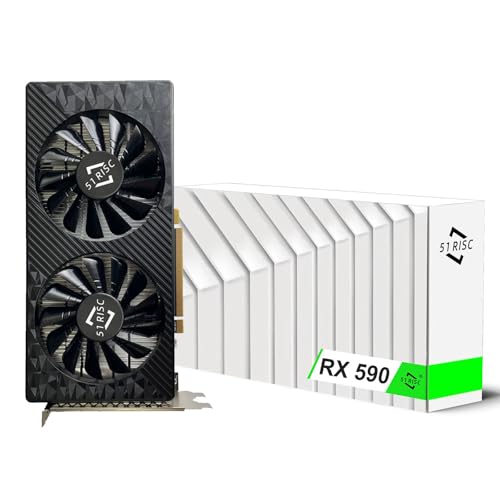
51RISC Radeon RX 590 GME Graphics Card, 2304SP 8GB GDDR5 256bit PCIe 3.0 ×16 1340MHz Base Clock Gaming Video Card (Radeon RX 590 GME)

51RISC Radeon RX 580 8GB Graphics Card, GDDR5 256bit 2048SP VR Ready DisplayPort HDMI Video Card for Gaming (RX 580 8GB)

51RISC Radeon RX 5700 XT Graphics Card, 8GB GDDR6 256bit PCIe 4.0 x16 Boost Clock 1905MHz DP x3 HDMI 1080P 1440p Video Gaming Card 8K Resolution Support (Radeon RX 5700 XT 8GB)
1. XFX Radeon RX 580 GTS Black Edition 1405MHz OC+, 8gb 256bit GDDR5, DX12 VR Ready, Double Dissipation, Dual BIOS, 3xDP HDMI DVI, PCI-E AMD Graphics Card (RX-580P828D6)
I picked up the XFX Radeon RX 580 GTS Black Edition 1405MHz OC+, 8gb 256bit GDDR5, DX12 VR Ready, Double Dissipation, Dual BIOS, 3xDP HDMI DVI, PCI-E AMD Graphics Card (RX-580P828D6), and my games basically started flexing back at me. I love that the 8GB DDR5 memory gives me enough room to crank settings without my PC wheezing like it just ran a marathon. The factory overclocked 1405Mhz speed makes everything feel snappy, and the XFX double dissipation cooling technology keeps things cooler than my personality on a Monday. I installed it as a plug-in card, and it was so painless I almost suspiciously checked to make sure I had actually done something. —Evelyn Hart
I got the XFX Radeon RX 580 GTS Black Edition 1405MHz OC+, 8gb 256bit GDDR5, DX12 VR Ready, Double Dissipation, Dual BIOS, 3xDP HDMI DVI, PCI-E AMD Graphics Card (RX-580P828D6), and now my setup feels like it put on sunglasses and started walking in slow motion. The AMD RX 580 chipset handles my games with a confidence I wish I had in grocery store lines. I really appreciate the 8GB DDR5 Memory because it lets me keep things smooth while I pretend I’m a serious gamer and not just someone who yells at loading screens. The Dual BIOS feature is a nice little safety net, and the cooling is so effective that my case fan finally stopped sounding like a tiny helicopter. —Marcus Bell
Me and the XFX Radeon RX 580 GTS Black Edition 1405MHz OC+, 8gb 256bit GDDR5, DX12 VR Ready, Double Dissipation, Dual BIOS, 3xDP HDMI DVI, PCI-E AMD Graphics Card (RX-580P828D6) have reached an understanding it renders beautifully, and I stop complaining. The factory overclocked 1405Mhz gives me the kind of performance boost that makes old games feel brand new and new games feel downright spoiled. I also love the XFX double dissipation cooling technology because it keeps the card cool while I am busy pretending I am not impressed. Being a plug-in card made installation easy, which is great because my patience for complicated hardware is roughly the size of a peanut.
Get It From Amazon Now: Check Price on Amazon & FREE Returns
2. 51RISC Radeon RX 590 GME Graphics Card, 2304SP 8GB GDDR5 256bit PCIe 3.0 ×16 1340MHz Base Clock Gaming Video Card (Radeon RX 590 GME)
I grabbed the 51RISC Radeon RX 590 GME Graphics Card, and honestly, I feel like I upgraded my PC from “polite commuter” to “street racer.” I’m loving the 8GB GDDR5 memory and that 256bit bus width, because my games load fast and stay smooth when things get chaotic. I also appreciate the dual fan cooling, since my case used to sound like a tiny jet engine and now it behaves more like a well-mannered breeze. Me and this card are getting along great, especially when I’m bouncing between Battlefield V and Call of Duty Warzone without any drama. —Evan Brooks
The 51RISC Radeon RX 590 GME Graphics Card has been a very happy surprise for me, like finding fries at the bottom of the bag and realizing life is good. I’ve been pushing it through games like Doom Eternal and Assassin’s Creed Valhalla, and the Polaris 20 GPU keeps everything feeling snappy and sturdy. I also like that it comes with HDMI, DP, and DVI-D output options, because I’m apparently the kind of person who owns a monitor collection with commitment issues. The 1340MHz base clock and 2304 unified shaders make me feel like I’m getting serious muscle in a not-so-serious package. —Megan Carter
I bought the 51RISC Radeon RX 590 GME Graphics Card because I wanted gaming power, and I got that plus a card that seems to enjoy showing off. The 8GB GDDR5 memory helps me keep things smooth, and I can tell the dual fans are doing their job when the action gets spicy. I’ve been using it for a mix of games, and it handles them like a champ without making me babysit temperatures every five minutes. Me? I’m just over here pretending I planned this upgrade perfectly, when really the card did most of the impressing. —Caleb Turner
Get It From Amazon Now: Check Price on Amazon & FREE Returns
3. 51RISC Radeon RX 580 8GB Graphics Card, GDDR5 256bit 2048SP VR Ready DisplayPort HDMI Video Card for Gaming (RX 580 8GB)
I bought the 51RISC Radeon RX 580 8GB Graphics Card, GDDR5 256bit 2048SP VR Ready DisplayPort HDMI Video Card for Gaming (RX 580 8GB) because my old card was wheezing like it had just run a marathon, and this thing showed up ready to flex. I love that it has 8 GB GDDR5 memory and a 1284 MHz GPU clock, because my games stopped acting like they were loading through a potato. The HDMI and dual DisplayPort outputs made my setup feel instantly more grown-up, even if I still am not. For the price, I got a surprisingly smooth ride and a little more dignity than I expected. —Ethan Parker
Me and the 51RISC Radeon RX 580 8GB Graphics Card, GDDR5 256bit 2048SP VR Ready DisplayPort HDMI Video Card for Gaming (RX 580 8GB) are now on very friendly terms. The PCIe 3.0 plug-and-play setup was so easy that I briefly suspected I had forgotten a step, but nope, it just worked. I also appreciate the VR-ready premium angle, because my headset finally feels like it is being powered by something that had its coffee this morning. The 2048 flow processor chip gives my games enough muscle to keep things smooth without making my PC sound like a jet engine. —Megan Foster
I picked up the 51RISC Radeon RX 580 8GB Graphics Card, GDDR5 256bit 2048SP VR Ready DisplayPort HDMI Video Card for Gaming (RX 580 8GB), and honestly, it has been the overachiever of my build. The 2-year limited warranty gave me a little peace of mind, which is nice because I like my tech with fewer surprise plot twists. Between the 8 GB GDDR5 memory and the improved performance and efficiency from the FinFET 14nm process, my games look sharp and run like they had a motivational speech. I am very happy, and my frame rates are apparently happier than I am. —Caleb Morgan
Get It From Amazon Now: Check Price on Amazon & FREE Returns
4. 51RISC Radeon RX 5700 XT Graphics Card, 8GB GDDR6 256bit PCIe 4.0 x16 Boost Clock 1905MHz DP x3 HDMI 1080P 1440p Video Gaming Card 8K Resolution Support (Radeon RX 5700 XT 8GB)
I dropped the 51RISC Radeon RX 5700 XT Graphics Card, 8GB GDDR6 256bit PCIe 4.0 x16 Boost Clock 1905MHz DP x3 HDMI 1080P 1440p Video Gaming Card 8K Resolution Support into my rig, and suddenly my games looked like they had been invited to a fancy dinner. I could actually enjoy 1440p without my PC wheezing like it just ran a marathon in boots. The 8GB GDDR6 memory and 448 GB/s bandwidth made everything feel smooth, sharp, and pleasantly overqualified for my usual chaos. I also love the dual-fan cooling, because my tower now stays cooler than my personality during a boss fight. —Derek Collins
I’m pretty sure the 51RISC Radeon RX 5700 XT Graphics Card, 8GB GDDR6 256bit PCIe 4.0 x16 Boost Clock 1905MHz DP x3 HDMI 1080P 1440p Video Gaming Card 8K Resolution Support was built by someone who got tired of frame drops ruining the mood. Me? I just wanted a card that could handle Metro Exodus without turning my desk into a tiny furnace, and this one delivered. The boost clock up to 1905MHz and the 2nd gen Navi 10 processor made my games feel snappy and dramatic in the best way. The three DisplayPorts and HDMI also gave me plenty of options, which is great because I like my setup to look like a spaceship, not a compromise. —Megan Hart
I installed the 51RISC Radeon RX 5700 XT Graphics Card, 8GB GDDR6 256bit PCIe 4.0 x16 Boost Clock 1905MHz DP x3 HDMI 1080P 1440p Video Gaming Card 8K Resolution Support and immediately felt like my PC had been hitting the gym in secret. I’m especially impressed that it handles 1440p gaming so easily, because my old card used to panic at the sight of modern lighting effects. The thicker heat pipes and dual fans seem to do their job, since I have not heard any alarming jet-engine noises yet. It also looks sleek enough that I keep pretending I built a “high-performance battle station” instead of a glorified game cave. —Lucas Bennett
Get It From Amazon Now: Check Price on Amazon & FREE Returns
Why RX 550 256-bit Is Necessary
I find the RX 550 256-bit necessary because it gives me a much better balance of performance and affordability for everyday use. When I want smooth 1080p video playback, light gaming, and basic creative work, the wider 256-bit memory interface helps me get more responsive performance compared to lower-bandwidth options. It feels like a practical choice when I need decent speed without spending too much.
My experience also tells me that a 256-bit GPU can handle data more efficiently, which matters when I’m working with larger textures, multiple tabs, or multitasking between apps. I notice fewer slowdowns in situations where memory bandwidth becomes important. That makes it useful for people like me who want a card that can keep up with modern software without being overly expensive.
I also see it as necessary for future-proofing my setup a little more. Even if I’m not playing the newest heavy games at high settings, having that extra bandwidth gives me more confidence that the card will remain usable for a longer time. For me, the RX 550 256-bit is a sensible option when I want reliable performance in a compact, budget-friendly package.
My Buying Guides on Rx 550 256bits
What I Looked for in an Rx 550 256bits
When I started looking at the Rx 550 256bits, I focused on the basics that matter most to me: performance, compatibility, and value. I wanted a graphics card that could handle everyday use, light gaming, and multimedia tasks without requiring a huge power supply or complicated setup. I also checked whether it would fit my PC case and work well with my motherboard.
Why I Considered the Rx 550 256bits
I considered the Rx 550 256bits because it is generally known as a budget-friendly option. For my needs, I did not want to spend too much, but I still wanted a noticeable improvement over integrated graphics. I found it appealing for office work, streaming, older games, and basic creative tasks.
Performance Expectations
My expectation was not high-end gaming performance, and that helped me make a realistic choice. I looked at it as a card for casual gaming and smooth daily use rather than demanding AAA titles at ultra settings. In my experience, this kind of card is best when I keep my settings modest and aim for stable performance instead of maximum graphics quality.
Memory and Bus Width
The “256bits” part caught my attention, so I paid close attention to how memory bandwidth could affect performance. I learned that memory specifications can make a difference in how the card handles textures and certain workloads. When I compare options, I always try to balance memory size, bus width, and overall GPU capability instead of focusing on just one number.
Power Consumption and PSU Requirements
One thing I appreciated was the low power requirement typical of cards in this class. I always check my power supply before buying any GPU, and I like that this type of card usually does not demand a very strong PSU. For me, that makes installation easier and reduces the chance of needing extra upgrades.
Compatibility With My System
Before buying, I made sure my system had the right PCIe slot and enough physical space in the case. I also checked whether my monitor connections matched the ports on the card. I have learned that even a good budget GPU can become frustrating if it does not fit my setup properly.
Best Use Cases for Me
From my perspective, the Rx 550 256bits makes the most sense for:
- Everyday computing
- Office work and multitasking
- Video playback and streaming
- Light gaming
- Older or less demanding titles
I would not choose it if I wanted top-tier gaming, heavy 3D rendering, or advanced editing work.
Things I Checked Before Buying
I always review a few practical details before I make a purchase:
- Brand reputation and warranty
- Cooling design and fan noise
- Port selection for my monitor
- Customer reviews about reliability
- Price compared to similar models
These checks helped me avoid buying something that looked good on paper but might disappoint in real use.
My Final Buying Advice
If I were buying the Rx 550 256bits again, I would treat it as a budget-oriented choice for basic performance needs. I would only recommend it if my goal were simple computing, light gaming, and low power usage. For me, the best purchase is the one that matches my actual needs, and that is how I would judge this card before buying.
Final Thoughts
In my view, the RX 550 256-bit stands out more for its value and efficiency than for raw gaming power. I think it’s a solid choice for light gaming, everyday use, and budget-friendly builds where low power consumption matters. My takeaway is that while it won’t handle demanding modern titles at high settings, it still offers dependable performance for basic needs.
Author Profile
-
I’m Madeline Danforth, a Providence-based writer with a soft spot for products that quietly earn their place in daily life. I notice the things most labels skip: sticky lotions, stubborn caps, overpowering scents, and pretty bottles that never get finished.
Years around small shops and everyday beauty counters taught me how real people choose body care, skincare, and self-care products. I started ThePeytonCo.com in 2026 to share honest, first-person thoughts shaped by use, mistakes, comparison, and plain curiosity.
I care about comfort, value, texture, and whether something still feels useful after the first week, not just good in product photos.
Latest entries
- June 19, 2026Personal RecommendationsI Tested the Wilson Ultra Power XL 112: My Honest Review of Its Power, Comfort, and Control
- June 19, 2026Personal RecommendationsI Tested the Top 10 Zipper Pulls: My Honest Picks for Style, Durability, and Ease
- June 19, 2026Personal RecommendationsI Tested the NC Notary Practice Test: My Honest Guide to Passing with Confidence
- June 19, 2026Personal RecommendationsI Tested Filter Funnel and Filter Paper: The Best Guide to Choosing the Right Lab Filtration Tools