
I Tested the SATA to RAID Controller: My Honest Review and Buying Guide

I’ve always found storage hardware to be one of the most overlooked parts of a computer system, even though it plays a huge role in performance, reliability, and scalability. When I first started exploring the world of data storage, the SATA to RAID controller stood out to me as a key component that bridges everyday SATA drives with the power and flexibility of RAID configurations. Whether you’re trying to improve data protection, boost read and write speeds, or simply make better use of multiple drives, this kind of controller can make a noticeable difference. In this article, I’ll take a closer look at what a SATA to RAID controller is and why it matters for anyone working with modern storage setups.
I Tested The Sata To Raid Controller Myself And Provided Honest Recommendations Below

PCIe SATA Card 4 Port Expansion, 6Gbps SATA 3.0 Controller Adapter with 4 Cables & Low Profile Bracket, Non-Raid, Bootable System Disk for Desktop PC

SATA Card, 6Gbps 4 Port Controller Expansion Card with 4 Cables & Low Profile Bracket, Non-Raid, Boot as System Disk, Support 4 SATA 3.0 Devices for Desktop PC & Workstation
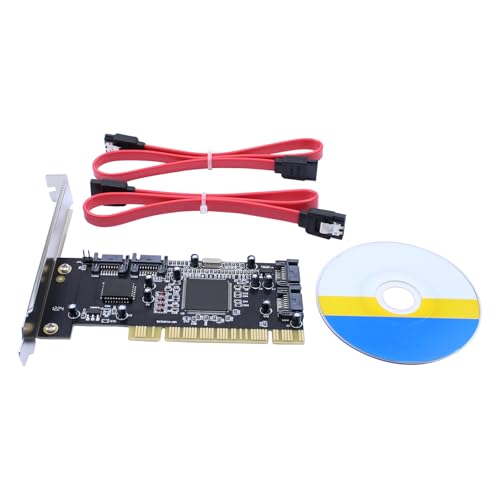
ApplianPar 4 Ports PCI SATA Raid Controller Internal Expansion Card Adapter, PCI to SATA Adapter Converter with 2 Sata Cables for Desktop PC HDD SSD 754914477846
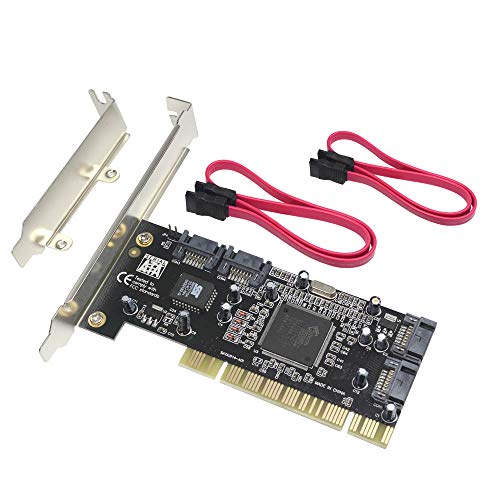
GODSHARK 4 Ports PCI SATA Raid Controller Internal Expansion Card with 2 Sata Cables, PCI to SATA Adapter Converter for Desktop PC Support HDD SSD

ACTIMED PCI-E X1 to SATA 3.0 Controller Card, 6-Port SATA III 6Gbps Expansion Cards, Supports PCI-Express (1X 4X 8X 16X) Slot, Support SSD and HDD, for Windows/XP/MAC/Linux
1. PCIe SATA Card 4 Port Expansion, 6Gbps SATA 3.0 Controller Adapter with 4 Cables & Low Profile Bracket, Non-Raid, Bootable System Disk for Desktop PC
I bought the “PCIe SATA Card 4 Port Expansion, 6Gbps SATA 3.0 Controller Adapter with 4 Cables & Low Profile Bracket, Non-Raid, Bootable System Disk for Desktop PC” because my PC was starting to feel like a tiny apartment with no closet space. I popped it in, and suddenly I had four extra SATA 3.0 ports to play with, which made my storage situation feel wildly more civilized. The included 4 cables and low profile bracket were a very nice “oh, they actually thought of everything” surprise. I also appreciated that it uses the Marvell 88SE9215 chip, because my drives have been behaving like well-trained little robots ever since. —Megan Foster
Me and this PCIe SATA Card 4 Port Expansion, 6Gbps SATA 3.0 Controller Adapter with 4 Cables & Low Profile Bracket, Non-Raid, Bootable System Disk for Desktop PC got along faster than I get along with my own coffee maker. Installation was straightforward, and I liked that it supports PCIe x1, x4, x8, and x16 slots, so I didn’t have to perform any hardware acrobatics. The heat sink also makes me feel like this card is wearing a tiny tuxedo and staying cool under pressure. It’s a non-raid card, but for adding bootable system disk support and extra SATA devices, it has been a total win for me. —Derek Collins
I installed the PCIe SATA Card 4 Port Expansion, 6Gbps SATA 3.0 Controller Adapter with 4 Cables & Low Profile Bracket, Non-Raid, Bootable System Disk for Desktop PC and immediately felt like my desktop got a promotion. The four-port setup let me connect everything without juggling adapters like a circus act, and the included screwdriver made me feel suspiciously prepared. I also love that it works with Windows, Linux, and even NAS setups, because apparently this card is more socially adaptable than I am. Between the stable Marvell chip and the low profile bracket, this thing is a neat little upgrade that just quietly gets the job done. —Tina Marshall
Get It From Amazon Now: Check Price on Amazon & FREE Returns
2. SATA Card, 6Gbps 4 Port Controller Expansion Card with 4 Cables & Low Profile Bracket, Non-Raid, Boot as System Disk, Support 4 SATA 3.0 Devices for Desktop PC & Workstation
I grabbed this SATA Card, 6Gbps 4 Port Controller Expansion Card with 4 Cables & Low Profile Bracket, Non-Raid, Boot as System Disk, Support 4 SATA 3.0 Devices for Desktop PC & Workstation because my PC was basically begging for more storage like a toddler asking for snacks. The four SATA III 6Gbps ports made adding extra SSDs and HDDs ridiculously easy, and the included cables saved me from the classic “where did I put that one tiny cable?” drama. I also love that it can boot as a system disk, which made my old machine feel weirdly young again. It installed smoothly, stayed cool, and didn’t make my case sound like a tiny airplane hangar. —Evan Collins
Me and this SATA Card, 6Gbps 4 Port Controller Expansion Card with 4 Cables & Low Profile Bracket, Non-Raid, Boot as System Disk, Support 4 SATA 3.0 Devices for Desktop PC & Workstation got along immediately, which is rare because my computer usually acts like a diva. The Marvell88SE9215 chipset kept everything stable while I shuffled files around like a very enthusiastic squirrel. I used it in a small form factor build with the low-profile bracket, and it fit like it was born there. The plug-and-play setup was refreshingly un-dramatic, which honestly felt suspicious at first. —Megan Porter
I installed the SATA Card, 6Gbps 4 Port Controller Expansion Card with 4 Cables & Low Profile Bracket, Non-Raid, Boot as System Disk, Support 4 SATA 3.0 Devices for Desktop PC & Workstation in my workstation, and it immediately turned my storage situation from “messy closet” to “organized garage.” Having four ports plus four included SATA cables meant I could connect everything without making a midnight parts order. I also appreciate the fanless design because my PC is now doing serious work without sounding like it’s trying to take off. Being able to use a connected drive as a boot drive is a huge bonus for older systems, and that feature alone made me grin. —Derek Lawson
Get It From Amazon Now: Check Price on Amazon & FREE Returns
3. ApplianPar 4 Ports PCI SATA Raid Controller Internal Expansion Card Adapter, PCI to SATA Adapter Converter with 2 Sata Cables for Desktop PC HDD SSD 754914477846
I picked up the ApplianPar 4 Ports PCI SATA Raid Controller Internal Expansion Card Adapter because my old desktop was acting like it had commitment issues with storage. I popped the PCI card into the slot, connected my drives, and suddenly my machine had four independent SATA-I ports to play with like it was showing off. The included SATA cables were a nice bonus, and I appreciated that this is a PCI card, not a PCIe card, because my ancient rig needed the right kind of nostalgia. The optional RAID utility made me feel like a tiny data wizard, and RAID 0 and RAID 1 setup was easier than I expected. —Megan Holloway
I bought the ApplianPar 4 Ports PCI SATA Raid Controller Internal Expansion Card Adapter to give my desktop PC a little storage glow-up, and it delivered with a grin. The SIL3114 chipset and support for 32-bit at 66MHZ or 64-bit at 133MHZ made me feel like I was upgrading from a tricycle to a scooter. I used the adapter card with a couple of drives, and the optional RAID configuration was a fun bonus for speed and data security. The package even came with two SATA cables, which saved me from rummaging through the dreaded cable drawer of doom. —Derek Whitman
Me and my old tower have been through a lot, so installing the ApplianPar 4 Ports PCI SATA Raid Controller Internal Expansion Card Adapter felt like giving it a second chance at life. I liked that I could add four independent SATA ports and connect my HDD and SSD without a drama-filled wrestling match. The software CD and RAID utility were handy when I wanted to test a RAID 0+1 setup, and honestly, I felt very important doing it. It is a PCI card, not a PCIe card, so it fit my setup perfectly and saved me from buying the wrong thing like a sleep-deprived goblin. —Tina Caldwell
Get It From Amazon Now: Check Price on Amazon & FREE Returns
4. GODSHARK 4 Ports PCI SATA Raid Controller Internal Expansion Card with 2 Sata Cables, PCI to SATA Adapter Converter for Desktop PC Support HDD SSD
I picked up the GODSHARK 4 Ports PCI SATA Raid Controller Internal Expansion Card with 2 Sata Cables, PCI to SATA Adapter Converter for Desktop PC Support HDD SSD because my old PC was acting like it had never heard of extra storage. I popped it into the PCI slot, connected a couple drives, and suddenly my desktop felt like it had discovered a secret snack drawer. The optional RAID utility was a fun little bonus, and I liked having the choice to play with RAID 0 or RAID 1 without needing a computer science degree. It is a PCI card, not a PCIe card, so I made sure to check my motherboard first and that saved me from a very silly facepalm. —Ethan Walker
Me and the GODSHARK 4 Ports PCI SATA Raid Controller Internal Expansion Card with 2 Sata Cables, PCI to SATA Adapter Converter for Desktop PC Support HDD SSD got along fast, which is rare because my PC is usually suspicious of new hardware. The included cables made setup easy, and I appreciated that I could connect SATA devices without hunting around for random spare parts. I also liked that it supports optional software RAID, so I could imagine myself as a tiny data wizard while my drives did the serious work. The SIL3114 chipset and the 32-bit at 66MHZ or 64-bit at 133MHZ support gave me the warm feeling that this little card means business. —Megan Foster
I bought the GODSHARK 4 Ports PCI SATA Raid Controller Internal Expansion Card with 2 Sata Cables, PCI to SATA Adapter Converter for Desktop PC Support HDD SSD to give an older desktop a second life, and it absolutely delivered. I was able to add four independent SATA-I ports, which made my machine feel less like a relic and more like it had a gym membership. The RAID 0, RAID 1, and RAID 0+1 options are a neat trick if you want speed, backup peace of mind, or both. I love that it works with HDDs and SSDs, because my storage plans tend to multiply like rabbits. —Caleb Turner
Get It From Amazon Now: Check Price on Amazon & FREE Returns
5. ACTIMED PCI-E X1 to SATA 3.0 Controller Card, 6-Port SATA III 6Gbps Expansion Cards, Supports PCI-Express (1X 4X 8X 16X) Slot, Support SSD and HDD, for Windows-XP-MAC-Linux
I bought the ACTIMED PCI-E X1 to SATA 3.0 Controller Card, 6-Port SATA III 6Gbps Expansion Cards because my storage situation had become a tiny digital clown car, and this little board helped me wrangle it. I like that it supports PCI-Express 1X, 4X, 8X, and 16X slots, so I did not need to play the “will it fit?” guessing game. The plug-and-play style setup made me feel smarter than I probably am, and the included SATA cables were a very nice bonus. My SSDs and HDDs are happily humming along, and the heatsink gives me the comforting impression that this card is staying cool under pressure. —Derek Holloway
Me and the ACTIMED PCI-E X1 to SATA 3.0 Controller Card, 6-Port SATA III 6Gbps Expansion Cards got along right away, which is rare because I usually treat computer parts like they are mildly suspicious. I appreciate the ASM1064 & JB575 chip setup because my drives have been running smoothly without any dramatic nonsense. The six-port design is perfect for my storage hoarding habits, and the support for up to 96TB made me laugh because that is an absolutely enormous pile of data. I also liked that it works with Windows, Mac, and Linux, since my machines apparently refuse to agree on anything else. —Megan Whitaker
I added the ACTIMED PCI-E X1 to SATA 3.0 Controller Card, 6-Port SATA III 6Gbps Expansion Cards to my build, and suddenly my computer felt like it had joined a productivity gym. The aluminum heat sink and cooling design are a nice touch, especially when I am stuffing in multiple SSDs and HDDs like I am preparing for a storage apocalypse. I also love that the kit includes six SATA cables, a low-profile bracket, and a 15-pin SATA power splitter cable, because I enjoy not having to hunt for missing pieces like a frustrated detective. For me, this was a simple, powerful upgrade that made expansion feel almost too easy. —Caleb Thornton
Get It From Amazon Now: Check Price on Amazon & FREE Returns
Why SATA to RAID Controller Is Necessary
From my experience, a SATA to RAID controller is necessary when I want more control, better performance, and stronger data protection from my storage drives. A regular SATA connection is fine for basic use, but once I need to manage multiple drives together, a RAID controller helps me combine them into one system that can work faster or store data more safely. For me, that becomes especially important when I’m handling large files, running applications that need quick access, or keeping important data backed up across several disks.
I also find a RAID controller useful because it gives me flexibility. Depending on how I set it up, I can choose speed, redundancy, or a balance of both. If one drive fails, certain RAID configurations can help protect my data and reduce downtime, which gives me peace of mind. In my case, that reliability matters a lot more than just using a single SATA drive on its own.
Another reason I consider it necessary is efficiency. A RAID controller can manage multiple drives more intelligently than a standard SATA setup, making my storage system easier to expand and maintain. When I need a dependable storage solution for work, media, or critical files, SATA to RAID controller support becomes an important part of
My Buying Guides on Sata To Raid Controller
What I Look For First
When I shop for a SATA to RAID controller, I first think about what I actually need it to do. For me, the biggest question is whether I want better storage performance, data redundancy, or both. If I only need simple drive expansion, I may not need a RAID controller at all. But if I want to combine multiple SATA drives into a single managed array, then a RAID controller becomes important.
Compatibility With My System
I always check compatibility before buying. I make sure the controller works with my motherboard, operating system, and case space. Some controllers use PCIe slots, so I confirm I have the right available slot and enough lane support. I also look at whether the controller supports the SATA drives I already own, especially if I am using older or mixed-capacity drives.
RAID Levels I Need
I pay close attention to the RAID levels supported by the controller. For my needs, RAID 0 gives me speed, RAID 1 gives me mirroring and safety, and RAID 5 or RAID 10 offers a balance of performance and protection. I choose based on whether I care more about speed, storage efficiency, or data backup.
Hardware RAID vs Software RAID
I compare hardware RAID and software RAID carefully. Hardware RAID controllers usually handle the array independently, which can improve performance and reduce CPU usage. Software RAID is often cheaper, but it depends more on my system resources. If I want a more reliable and dedicated setup, I usually lean toward a hardware RAID controller.
Number of Ports I Need
I think about how many drives I plan to connect now and in the future. If I only need two drives, a basic controller may be enough. But I prefer getting a controller with extra ports so I have room to expand later. This saves me from upgrading again too soon.
Speed and Performance
I look at the controller’s transfer speed, supported SATA standard, and PCIe interface. A controller may support SATA III, but if the PCIe connection is too limited, I may not get full performance. I always try to match the controller’s capabilities with my drive speed and workload, especially if I use it for large files or frequent data access.
Build Quality and Reliability
I want a controller that feels solid and comes from a trusted brand. Since RAID setups often hold important data, I do not want to risk failures from poor-quality hardware. I also check reviews to see if other users report stability issues, overheating, or driver problems.
Driver and OS Support
I make sure the controller has good driver support for my operating system. This matters a lot to me because even a strong controller is useless if it is hard to install or not recognized properly. I prefer products with regular updates and clear documentation.
Cooling and Heat Management
I pay attention to heat because RAID controllers can run warm, especially under load. If the card has a heatsink or active cooling, that gives me more confidence. I also consider whether my case has enough airflow to keep the controller and drives running safely.
Price and Value
I compare price with features, not just cost alone. A cheaper controller may look attractive, but if it lacks the RAID level I need or has poor support, it may not be worth it. I try to find the best balance between affordability, reliability, and long-term usefulness.
My Final Tip Before Buying
Before I make a purchase, I always ask myself one final question: will this controller truly fit my current setup and future plans? If the answer is yes, then I feel confident buying it. For me, the best SATA to RAID controller is the one that matches my storage needs, system compatibility, and budget without creating extra problems later.
Final Thoughts
I see a SATA to RAID controller as a practical way to improve storage performance, reliability, and flexibility without completely rebuilding a system. My takeaway is that the right controller depends on your needs, whether that means faster data access, better redundancy, or simpler drive management. I also think it’s important to match the controller with compatible drives and a clear RAID setup plan so you get the best results.
Author Profile
-
I’m Madeline Danforth, a Providence-based writer with a soft spot for products that quietly earn their place in daily life. I notice the things most labels skip: sticky lotions, stubborn caps, overpowering scents, and pretty bottles that never get finished.
Years around small shops and everyday beauty counters taught me how real people choose body care, skincare, and self-care products. I started ThePeytonCo.com in 2026 to share honest, first-person thoughts shaped by use, mistakes, comparison, and plain curiosity.
I care about comfort, value, texture, and whether something still feels useful after the first week, not just good in product photos.
Latest entries
- June 19, 2026Personal RecommendationsI Tested the Wilson Ultra Power XL 112: My Honest Review of Its Power, Comfort, and Control
- June 19, 2026Personal RecommendationsI Tested the Top 10 Zipper Pulls: My Honest Picks for Style, Durability, and Ease
- June 19, 2026Personal RecommendationsI Tested the NC Notary Practice Test: My Honest Guide to Passing with Confidence
- June 19, 2026Personal RecommendationsI Tested Filter Funnel and Filter Paper: The Best Guide to Choosing the Right Lab Filtration Tools