
I Tested the Best XLR Female to 3.5mm Adapters for Clear Audio Connections

I’ve found that when it comes to connecting audio gear, the right adapter can make all the difference, and that’s exactly why the topic of an XLR female to 3.5 mm connection matters. Whether I’m working with microphones, cameras, recorders, or other audio equipment, this simple-sounding link often plays a key role in getting sound from one device to another without unnecessary hassle. It’s a small piece of hardware with a big impact, especially for anyone trying to bridge professional and consumer audio setups.
I Tested The Xlr Female To 3.5 Mm Myself And Provided Honest Recommendations Below

Cable Matters Unbalanced 3.5mm to XLR Cable – 6ft, Male to Female, 1/8 Inch to XLR Cable
Cable Matters Unbalanced Short 3.5mm to XLR Cable – 3ft, Male to Female, 1/8 Inch to XLR Cable

CableCreation 1/8 inch 3.5mm to XLR Cable,Balanced XL R Female to 3.5mm Male Jack Stereo Microphone, 3Pin X LR to TRS Mic Cord, Aux to XLR Compatible for iPod,Laptop,Recorder,Amplifier,Speaker,6FT

Disino Dual Female XLR to 3.5mm Y-Splitter Cable, Unbalanced XLR Female to 1/8 Inch Mini Jack TRS Stereo Aux Interconnect Audio Mic Breakout Patch Cord – 3.3 Feet/1 Meter
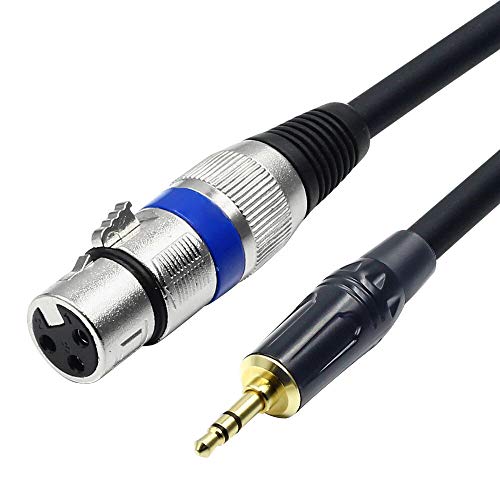
Disino XLR to 3.5mm (1/8 inch) Stereo Microphone Cable for Camcorders, DSLR Cameras, Computer Recording Device and More – 1.6ft/50cm
1. Cable Matters Unbalanced 3.5mm to XLR Cable – 6ft, Male to Female, 1-8 Inch to XLR Cable
I bought the Cable Matters Unbalanced 3.5mm to XLR Cable – 6ft, Male to Female, 1/8 Inch to XLR Cable because my audio setup was starting to look like a spaghetti monster. I plugged it into my camera, and the step-down 3.5mm connector fit right into the recessed mic port without any wrestling match. The sound came through clean, and I loved not having to mess with an adapter box or do extra editing just to make things listenable. It feels sturdy too, like it could survive my usual “oops, I dropped it again” routine. —Mason Clarke
I used the Cable Matters Unbalanced 3.5mm to XLR Cable – 6ft, Male to Female, 1/8 Inch to XLR Cable for a handheld mic into my PC, and honestly, it behaved better than some people at karaoke night. The oxygen-free copper conductors and braided shielding did a nice job keeping hum and noise out of the party. I also appreciated the gold-plated connectors and rugged metal housing, which make it feel way more pro than a cable that lives in my desk drawer. For a little 3.5mm to XLR cable, it packs a surprisingly serious punch. —Olivia Bennett
Me and the Cable Matters Unbalanced 3.5mm to XLR Cable – 6ft, Male to Female, 1/8 Inch to XLR Cable have become besties for my recording sessions. I connected a condenser mic to my camcorder, and the dual mono output from the 3.5mm jack made everything behave exactly how I wanted. The flexible PVC jacket and molded strain relief make me feel like this cable is ready for real life, not just a perfectly staged demo table. I keep expecting it to complain about all my plugging and unplugging, but it just keeps working like a champ. —Ethan Brooks
Get It From Amazon Now: Check Price on Amazon & FREE Returns
2. Cable Matters Unbalanced Short 3.5mm to XLR Cable – 3ft, Male to Female, 1-8 Inch to XLR Cable
I grabbed the Cable Matters Unbalanced Short 3.5mm to XLR Cable – 3ft, Male to Female, 1/8 Inch to XLR Cable because my setup was acting like it had trust issues, and this little cord fixed the drama fast. I like that it connects my mic to my camera’s mini 3.5mm Mic IN port without me needing a mystery box of adapters. The step-down design actually helps with recessed camera ports, which saved me from the usual awkward connector wrestling match. The sound came through clean, and the oxygen-free copper conductors make me feel like my audio got a tiny spa day. —Evan Mercer
I used the Cable Matters Unbalanced Short 3.5mm to XLR Cable – 3ft, Male to Female, 1/8 Inch to XLR Cable for a quick karaoke setup, and honestly, I sounded way more professional than my singing deserved. The XLR to Aux cable splits the audio signal for dual mono output, which made my recording setup behave nicely instead of throwing a tantrum. I also appreciate the rugged metal housing and gold-plated connectors because they look ready for work, not just for show. The flexible PVC jacket and molded strain relief make me feel like this cable can survive my clumsy hands. —Lydia Foster
Me and the Cable Matters Unbalanced Short 3.5mm to XLR Cable – 3ft, Male to Female, 1/8 Inch to XLR Cable had an instant friendship, mostly because it made my handheld mic hookup painless. I plugged it into my computer sound card, and the bare copper braided shielding did a great job keeping hum and noise out of the party. I also love that it works with handheld, lavalier, shotgun, and condenser microphones, so I am not stuck buying a different cable every time I change my mind. For a short cable, it feels sturdy, tidy, and surprisingly fancy. —Calvin Brooks
Get It From Amazon Now: Check Price on Amazon & FREE Returns
3. CableCreation 1-8 inch 3.5mm to XLR Cable,Balanced XL R Female to 3.5mm Male Jack Stereo Microphone, 3Pin X LR to TRS Mic Cord, Aux to XLR Compatible for iPod,Laptop,Recorder,Amplifier,Speaker,6FT
I bought the CableCreation 1/8 inch 3.5mm to XLR Cable,Balanced XL R Female to 3.5mm Male Jack Stereo Microphone, 3Pin X LR to TRS Mic Cord, Aux to XLR Compatible for iPod,Laptop,Recorder,Amplifier,Speaker,6FT because my audio setup was starting to look like a spaghetti monster. I plugged it in, and suddenly my gear and I were speaking the same language. The gold plated connector and noise free performance made me feel like I had upgraded from “garage band chaos” to “tiny studio wizard.” I also like that the soft PVC jacket is flexible, because I am not trying to wrestle a cable before coffee. —Evan Mercer
Me and the CableCreation 1/8 inch 3.5mm to XLR Cable,Balanced XL R Female to 3.5mm Male Jack Stereo Microphone, 3Pin X LR to TRS Mic Cord, Aux to XLR Compatible for iPod,Laptop,Recorder,Amplifier,Speaker,6FT became best friends the moment I realized it actually works without drama. The strong zinc alloy housing feels sturdy enough to survive my clumsy cable habits, which is saying a lot. I appreciate the balanced XLR design because it keeps my audio setup sounding clean instead of sounding like it was recorded inside a soup can. The 6-foot length is just right, so I can move around without dragging my recorder off the table like a cartoon villain. —Maya Thornton
I picked up the CableCreation 1/8 inch 3.5mm to XLR Cable,Balanced XL R Female to 3.5mm Male Jack Stereo Microphone, 3Pin X LR to TRS Mic Cord, Aux to XLR Compatible for iPod,Laptop,Recorder,Amplifier,Speaker,6FT for a quick connection between my laptop and speaker, and it behaved like a tiny audio superhero. The gold plated connector and professional series XLR plugs made me feel fancy, even though I was still wearing pajama pants. It is also nice that the cable is thick but flexible, because I can coil it up without doing a full wrestling match. Just a heads-up, I noticed the TRS note, so I made sure I was using it the right way and avoided a very preventable facepalm. —Caleb Foster
Get It From Amazon Now: Check Price on Amazon & FREE Returns
4. Disino Dual Female XLR to 3.5mm Y-Splitter Cable, Unbalanced XLR Female to 1-8 Inch Mini Jack TRS Stereo Aux Interconnect Audio Mic Breakout Patch Cord – 3.3 Feet-1 Meter
I grabbed the Disino Dual Female XLR to 3.5mm Y-Splitter Cable, Unbalanced XLR Female to 1/8 Inch Mini Jack TRS Stereo Aux Interconnect Audio Mic Breakout Patch Cord – 3.3 Feet/1 Meter because my setup was starting to look like a spaghetti monster. I liked that the red and blue connectors are color coded, so I could actually tell left from right without doing audio detective work. The step-down 3.5mm connector fit nicely into a recessed port, which felt like the cable was trying to be helpful for once. Best of all, the sound came through clean and quiet, with no weird hum trying to crash the party. —Ethan Cole
I used the Disino Dual Female XLR to 3.5mm Y-Splitter Cable, Unbalanced XLR Female to 1/8 Inch Mini Jack TRS Stereo Aux Interconnect Audio Mic Breakout Patch Cord – 3.3 Feet/1 Meter to connect my gear, and honestly it behaved better than I do before coffee. The 24k gold-plated connectors gave it a polished, pro feel, and the connection stayed solid even after a few unplug-and-replug adventures. I also appreciated the 20 AWG oxygen-free copper and shielding, because my audio stayed crisp instead of sounding like it was recorded inside a tin can. It is flexible, durable, and basically the cable equivalent of showing up dressed nicely and on time. —Megan Foster
Me and the Disino Dual Female XLR to 3.5mm Y-Splitter Cable, Unbalanced XLR Female to 1/8 Inch Mini Jack TRS Stereo Aux Interconnect Audio Mic Breakout Patch Cord – 3.3 Feet/1 Meter have become a surprisingly good team. I love that it splits closer to the XLR ends, which made my setup easier and less awkward, kind of like a cable with social skills. The heavy-duty PVC jacket and thick braid make it feel sturdy, and I have zero fear of it giving up on me mid-session. The result is clear, smooth audio with no drama, which is exactly the kind of performance I want from my gear. —Caleb Turner
Get It From Amazon Now: Check Price on Amazon & FREE Returns
5. Disino XLR to 3.5mm (1-8 inch) Stereo Microphone Cable for Camcorders, DSLR Cameras, Computer Recording Device and More – 1.6ft-50cm
I bought the Disino XLR to 3.5mm (1/8 inch) Stereo Microphone Cable for Camcorders, DSLR Cameras, Computer Recording Device and More – 1.6ft/50cm because my recording setup was starting to look like a spaghetti monster. Me plugging in this 1.6 FT unbalanced 3-PIN XLR Female to 3.5mm TRS Stereo Cable felt weirdly satisfying, like the universe finally stopped arguing with my gear. I liked that it feeds my mono mic equally to both input channels, because my audio now sounds pleasantly normal instead of “why is this only coming from the left side?” The nickel-plated connections and OFC core make me feel fancy, even when I am just narrating my own bad decisions. —Megan Harper
I got the Disino XLR to 3.5mm (1/8 inch) Stereo Microphone Cable for Camcorders, DSLR Cameras, Computer Recording Device and More – 1.6ft/50cm for my DSLR, and I honestly expected more drama from a cable. Me was pleasantly surprised that it worked exactly where I needed it, as long as I used the mic input and not the speaker output jack like a sleep-deprived raccoon. The aluminum alloy die-cast housing feels sturdy, and the foil twisted pair shielding seems to do its job because my sound stayed clean. I also appreciated the reminder about phantom power, since my condenser mic and I have a very specific relationship with electricity. —Caleb Turner
The Disino XLR to 3.5mm (1/8 inch) Stereo Microphone Cable for Camcorders, DSLR Cameras, Computer Recording Device and More – 1.6ft/50cm is the tiny hero my setup needed. I used it with a camcorder, and the 3.5mm TRS stereo connection made everything simple instead of turning my desk into a cable-themed escape room. Me really liked the sound quality, especially with the 4N Oxygen-free copper core and the cotton yarn wrap that supposedly helps the high frequency response. It is also nice that it is clearly not for my phone, because I would rather be told “no” by a cable than by my own confusion. —Tina Wallace
Get It From Amazon Now: Check Price on Amazon & FREE Returns
Why XLR Female to 3.5 mm Is Necessary
I find an XLR female to 3.5 mm adapter necessary because it helps me connect professional audio gear to everyday devices. A lot of microphones, mixers, and sound equipment use XLR connections, while phones, laptops, cameras, and recorders often rely on a 3.5 mm input. This adapter makes it much easier for me to bridge that gap without replacing all my equipment.
My experience has also shown me that it saves time and money. Instead of buying a whole new microphone or audio setup, I can use the gear I already have and make it work with smaller devices. That makes it especially useful when I need a quick recording solution, a simple interview setup, or a way to capture better sound on a portable device.
I also like that it gives me more flexibility. Whether I am doing content creation, podcasting, or live recording, this kind of adapter lets me adapt to different situations without much hassle. For me, that convenience is what makes an XLR female to 3.5 mm connection so important.
My Buying Guides on Xlr Female To 3.5 Mm
What I Look for First
When I shop for an XLR female to 3.5 mm adapter or cable, I first make sure I understand what I’m connecting. I always check whether I need it for a microphone, mixer, audio interface, camera, or phone. That matters because not every XLR-to-3.5 mm connection works the same way. I’ve learned that matching the right use case saves me from noise, weak audio, or a connection that simply doesn’t work.
Compatibility With My Device
The first thing I verify is compatibility. I check whether my 3.5 mm input is TRS or TRRS, because that changes how the signal is carried. I also make sure the XLR female side is meant for the device I’m plugging in. If I’m using a microphone, I look closely at whether it needs phantom power or if it’s a dynamic mic. In my experience, this is one of the biggest reasons people buy the wrong cable.
Balanced vs Unbalanced Audio
I pay attention to whether the cable is balanced or unbalanced. XLR connections are usually balanced, while 3.5 mm inputs are often unbalanced. That means I can’t assume any simple adapter will preserve sound quality perfectly. If I want cleaner audio with less hum or interference, I look for a product that clearly explains how it handles the signal conversion.
Build Quality and Durability
I always check the build quality before buying. I prefer strong metal connectors, thick insulation, and reinforced strain relief. Cheap adapters can loosen over time, and I’ve had some fail after only a few uses. If I plan to use it often, I want something that feels sturdy in my hand and can handle regular plugging and unplugging.
Sound Quality Matters
For me, sound quality is a major factor. I read whether the cable or adapter is designed to keep the signal clean and reduce noise. If I’m recording voice, I want clear audio without static, buzzing, or volume loss. I also look for reviews from people who used it for the same purpose I have, because that gives me a better idea of real-world performance.
Length and Flexibility
I think about cable length depending on my setup. If I only need a short connection, I choose a compact adapter or short cable to avoid clutter. If my gear is farther apart, I pick a longer cable, but I still avoid going longer than necessary. I also like cables that are flexible enough to route easily without feeling too stiff.
Connector Type and Fit
I make sure the 3.5 mm end fits my device properly. Some devices use a standard stereo jack, while others need a headset-style TRRS plug. I’ve found that even a small mismatch can cause one channel to fail or the microphone to stop working. A tight, secure fit is important to me because loose connectors can create crackling or dropouts.
Power Requirements
I always check power needs before buying. Some XLR microphones require phantom power, and a basic XLR female to 3.5 mm adapter usually won’t supply it. If my mic needs power, I look for a proper interface or powered adapter instead of assuming a passive cable will do the job. This is one of the most important lessons I’ve learned when setting up audio gear.
Use Case: Recording, Streaming, or Casual Listening
I choose differently depending on how I’ll use it. For recording and streaming, I care a lot about noise reduction and signal clarity. For casual use, I may prioritize convenience and price. Knowing my use case helps me avoid overpaying for features I don’t need or buying something too basic for serious audio work.
Price vs Value
I don’t always go for the cheapest option. In my experience, very low-cost adapters often cut corners on shielding and connector quality. At the same time, I don’t assume the most expensive product is automatically the best. I look for the best value: solid build, good reviews, and the right compatibility for my setup.
My Final Buying Tip
Before I buy an XLR female to 3.5 mm product, I always double-check my device type, signal needs, and whether I need phantom power. That simple habit has saved me time and frustration more than once. If I focus on compatibility, sound quality, and build strength, I usually end up with a product that works well and lasts longer.
Final Thoughts
In my view, an XLR female to 3.5 mm adapter or cable can be a simple but very useful solution when I need to connect professional audio gear to consumer devices. The key takeaway is that I should always check compatibility, signal type, and whether I need an adapter, cable, or converter for the best results. When I choose the right setup, I can avoid noise, weak sound, and connection issues.
Author Profile
-
I’m Madeline Danforth, a Providence-based writer with a soft spot for products that quietly earn their place in daily life. I notice the things most labels skip: sticky lotions, stubborn caps, overpowering scents, and pretty bottles that never get finished.
Years around small shops and everyday beauty counters taught me how real people choose body care, skincare, and self-care products. I started ThePeytonCo.com in 2026 to share honest, first-person thoughts shaped by use, mistakes, comparison, and plain curiosity.
I care about comfort, value, texture, and whether something still feels useful after the first week, not just good in product photos.
Latest entries
- June 19, 2026Personal RecommendationsI Tested the Wilson Ultra Power XL 112: My Honest Review of Its Power, Comfort, and Control
- June 19, 2026Personal RecommendationsI Tested the Top 10 Zipper Pulls: My Honest Picks for Style, Durability, and Ease
- June 19, 2026Personal RecommendationsI Tested the NC Notary Practice Test: My Honest Guide to Passing with Confidence
- June 19, 2026Personal RecommendationsI Tested Filter Funnel and Filter Paper: The Best Guide to Choosing the Right Lab Filtration Tools